
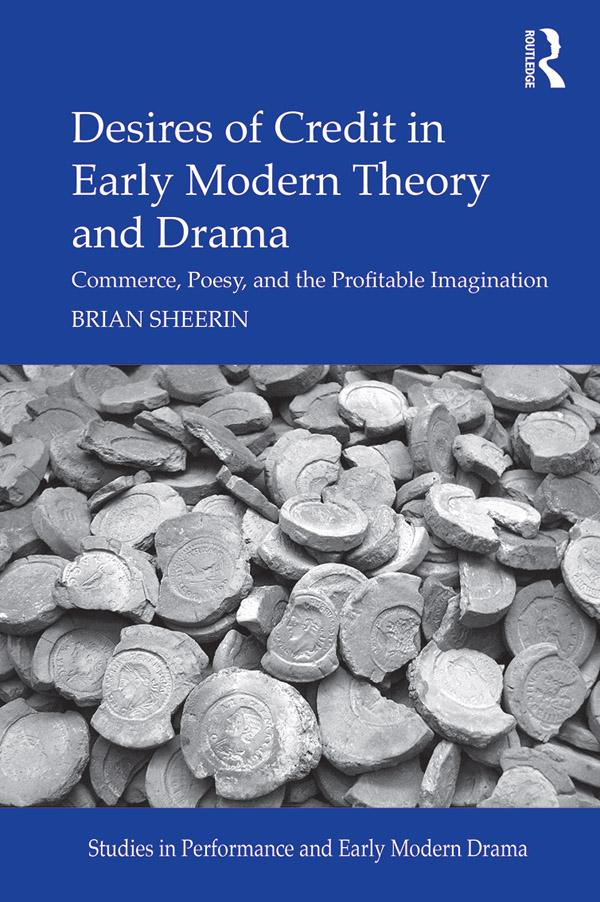
Desires of Credit in Early Modern Theory and Drama traces the near-simultaneous rise of economic theory, literary criticism, and public theater in London at the turn of the seventeenth century, and posits that connecting all three is a fascination with creating something out of nothing simply by acting as if it were there. Author Brian Sheerin contends that the motivating force behind both literary and economic inquiry at this time was the same basic quandary about the human imagination--specifically, how investments of belief can produce tangible consequences. Just as speculators were realizing the potency of collective imagination on economic circulation, readers and dramatists were becoming newly introspective about whether or not the 'lies' of literature could actually be morally 'profitable.' Could one actually benefit by taking certain fictions 'seriously'? Each of the five chapters examines a different dimension of this question by highlighting a particular dramatization of economic trust on the Renaissance stage, in plays by Marlowe, Shakespeare, Heywood, Dekker, and Jonson. The book fills a gap in current scholarship by keeping economic and dramatic interests rigorously grounded in early modern literary criticism, but also by emphasizing the productive nature of debt in a way that resonates with recent economic sociology.
Pagine: 158
Categoria: Litteraturvetenskap & Teori
e-ISBN: 9781317152019
Peso di spedizione: 1.2 kg
Spedito in: 1-2 giorni
Paga facilmente con carta, Klarna, Apple Pay o Google Pay. Non sei soddisfatto? Hai sempre 14 giorni per il rimborso. Leggi di più nei nostri termini. Per qualsiasi domanda, scrivici a hello@memmo.org.
Memmo rende lo studio più facile, ovunque tu sia nel mondo. Qui trovi i tuoi libri di testo e strumenti di studio intelligenti, tutto in un unico posto: riassunti, quiz, podcast e flashcard. E poi c'è Ted, il tuo compagno di studio che risponde a ogni tua domanda. Oltre 50.000 studenti studiano già qui: è stato creato per aiutarti a imparare più velocemente e a stressarti meno.
Potrebbe interessarti anche
Acquista il libro0