
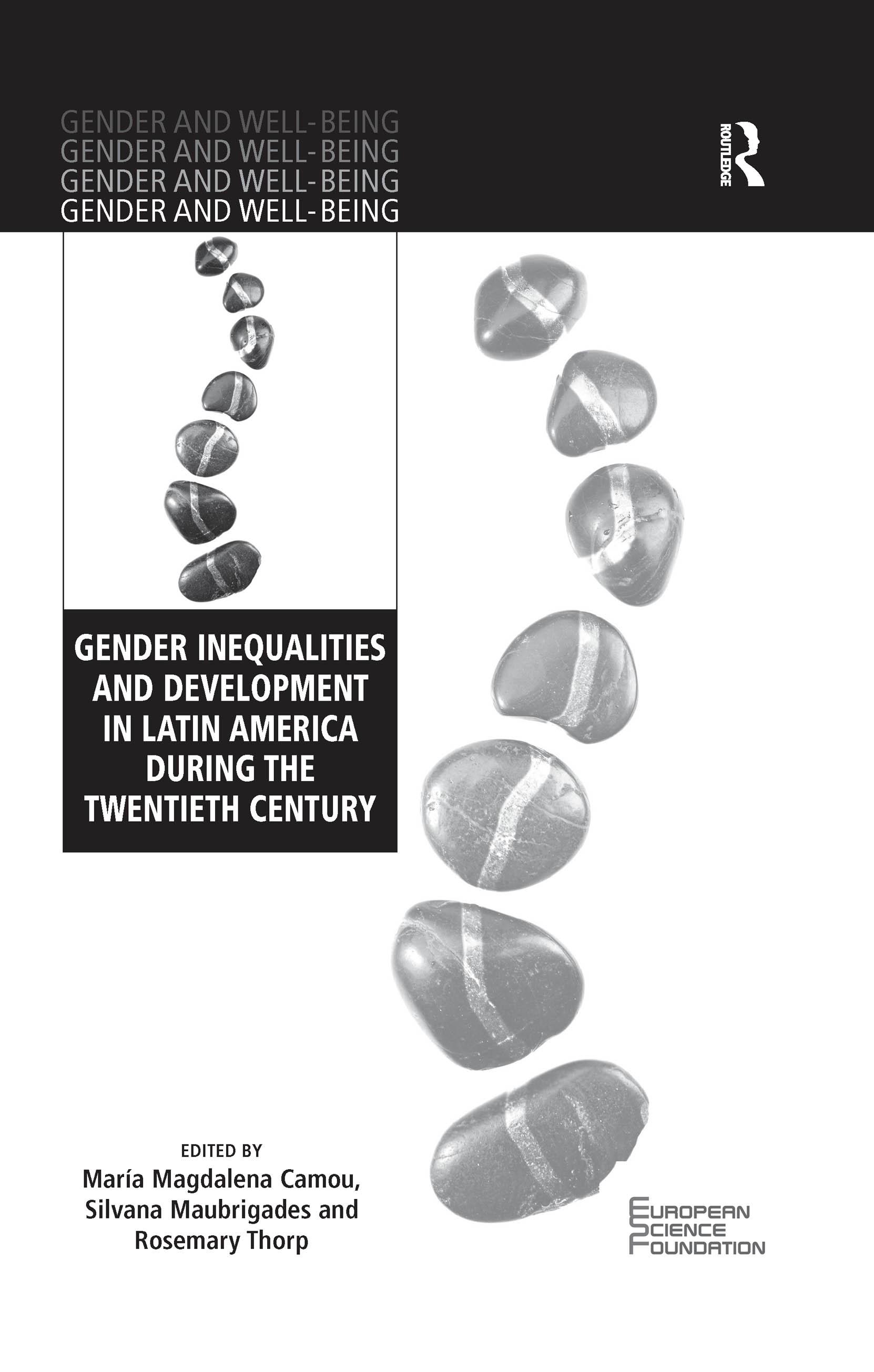
This book presents evidence of the evolution of the gender inequalities in Latin America during the twentieth century, using basic indicators of human development, namely education, health and the labour market. There are very few historical studies that centre on gender as the main analytical category in Latin America, so this book breaks new ground. Using case-studies from Argentina, Chile, Colombia, Mexico and Uruguay, the authors show that there is evidence of a correlation between economic growth and the decrease in gender inequality, but this process is also not linear. Although the activity rate of women was high at the beginning of the twentieth century, female participation in the labour market diminished, until the 1970s, when it began to increase dramatically. Since the 1970s, fertility reduction and education improvements and worsening labour market conditions are associated to the steadily increase of women participation in the labour market. By gauging the extent to which gender gaps in the formation of human capital, access to resources, quality of life and opportunities may have operated as a restriction on women’s capabilities and on economic growth in the region, this book demonstrates that Latin America has lagged behind in terms of gender equality.
Pagine: 278
Categoria: Ekonomi & Utveckling
e-ISBN: 9781317130208
Peso di spedizione: 1.2 kg
Spedito in: 1-2 giorni
Paga facilmente con carta, Klarna, Apple Pay o Google Pay. Non sei soddisfatto? Hai sempre 14 giorni per il rimborso. Leggi di più nei nostri termini. Per qualsiasi domanda, scrivici a hello@memmo.org.
Memmo rende lo studio più facile, ovunque tu sia nel mondo. Qui trovi i tuoi libri di testo e strumenti di studio intelligenti, tutto in un unico posto: riassunti, quiz, podcast e flashcard. E poi c'è Ted, il tuo compagno di studio che risponde a ogni tua domanda. Oltre 50.000 studenti studiano già qui: è stato creato per aiutarti a imparare più velocemente e a stressarti meno.
Potrebbe interessarti anche
Acquista il libro0