
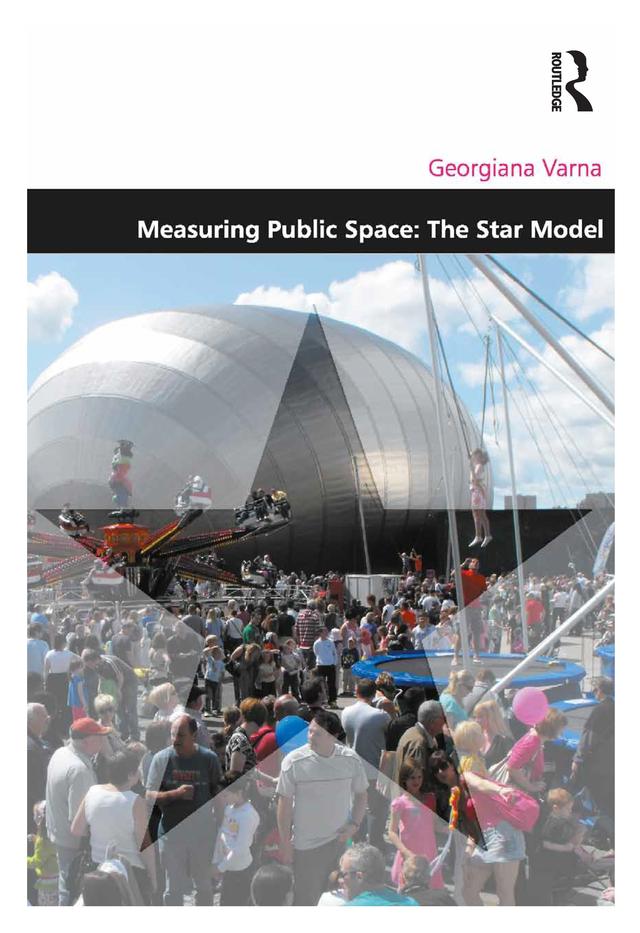
In the rapidly expanding public space debate of the past few years, a recurring theme is the ’loss of publicness’ of contemporary urban public places. This book takes up the challenge to find an objective way to prove or disprove this phenomenon. By taking the reader through a systematic and multi-disciplinary literature review it asks the deceptively simple question: ’What is publicness?’ It answers this by first developing a new theoretical approach - ’The dual nature of public space’, and secondly a new analytical tool for measuring it - ’The Star Model of Publicness’. This pragmatic approach to analysing public space is tested then on three new public places recently created on the post-industrial waterfront of the River Clyde, in the city of Glasgow, UK. By seeing where and why certain public places fail, direct and informed interventions can be made to improve them, and through this contribute to the building of more attractive and sustainable cities. By adopting a multi-disciplinary approach to shed light on this ’slippery’ concept, this book shows how urban design can complement other disciplines when tackling the complex task of understanding and improving the built environment’s public realm. It also bridges the gap between theory and practice as it draws from empirical research to suggest more quantitative approaches towards auditing and improving public places.
Paga facilmente con carta, Klarna, Apple Pay o Google Pay. Non sei soddisfatto? Hai sempre 14 giorni per il rimborso. Leggi di più nei nostri termini. Per qualsiasi domanda, scrivici a hello@memmo.org.
Memmo rende lo studio più facile, ovunque tu sia nel mondo. Qui trovi i tuoi libri di testo e strumenti di studio intelligenti, tutto in un unico posto: riassunti, quiz, podcast e flashcard. E poi c'è Ted, il tuo compagno di studio che risponde a ogni tua domanda. Oltre 50.000 studenti studiano già qui: è stato creato per aiutarti a imparare più velocemente e a stressarti meno.
Potrebbe interessarti anche
Acquista il libro0