
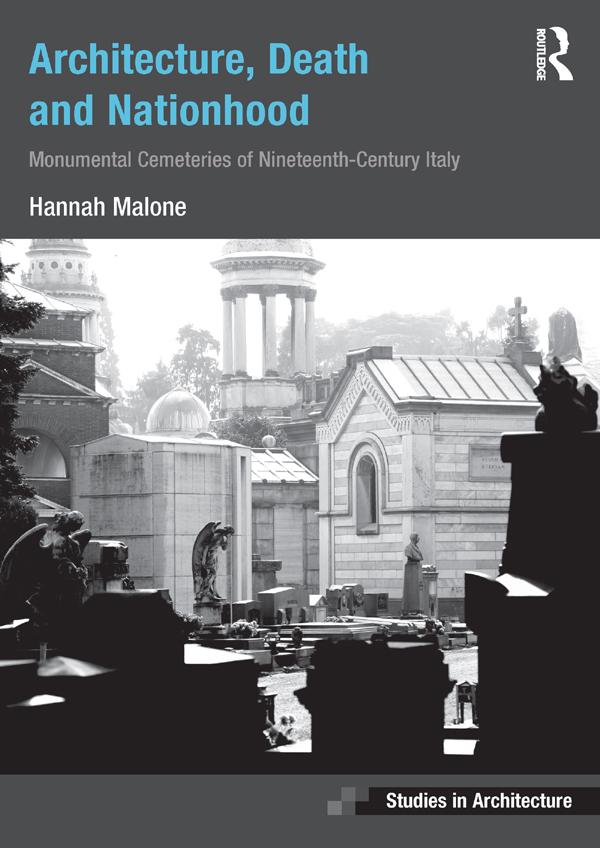
In the nineteenth century, new cemeteries were built in many Italian cities that were unique in scale and grandeur, and which became destinations on the Grand Tour. From the Middle Ages, the dead had been buried in churches and urban graveyards but, in the 1740s, a radical reform across Europe prohibited burial inside cities and led to the creation of suburban burial grounds. Italy’s nineteenth-century cemeteries were distinctive as monumental or architectural structures, rather than landscaped gardens. They represented a new building type that emerged in response to momentous changes in Italian politics, tied to the fight for independence and the creation of the nation-state.
As the first survey of Italy’s monumental cemeteries, the book explores the relationship between architecture and politics, or how architecture is formed by political forces. As cities of the dead, cemeteries mirrored the spaces of the living. Against the backdrop of Italy’s unification, they conveyed the power of the new nation, efforts to construct an Italian identity, and conflicts between Church and state. Monumental cemeteries helped to foster the narratives and mentalities that shaped Italy as a new nation.
Paga facilmente con carta, Klarna, Apple Pay o Google Pay. Non sei soddisfatto? Hai sempre 14 giorni per il rimborso. Leggi di più nei nostri termini. Per qualsiasi domanda, scrivici a hello@memmo.org.
Memmo rende lo studio più facile, ovunque tu sia nel mondo. Qui trovi i tuoi libri di testo e strumenti di studio intelligenti, tutto in un unico posto: riassunti, quiz, podcast e flashcard. E poi c'è Ted, il tuo compagno di studio che risponde a ogni tua domanda. Oltre 50.000 studenti studiano già qui: è stato creato per aiutarti a imparare più velocemente e a stressarti meno.