
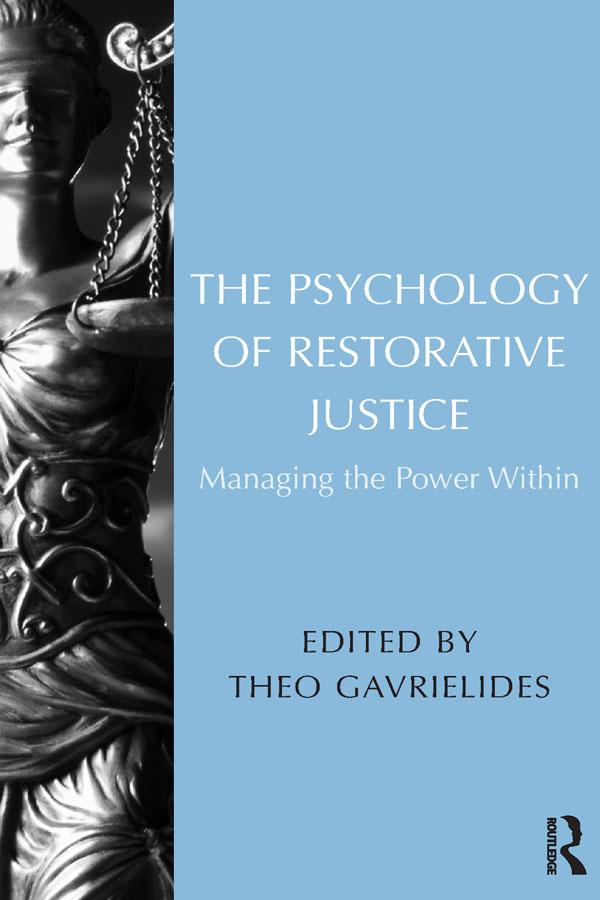
This ground-breaking collection dares to take the next step in the advancement of an autonomous, inter-disciplinary restorative justice field of study. It brings together criminology, social psychology, legal theory, neuroscience, affect-script psychology, sociology, forensic mental health, political sciences, psychology and positive psychology to articulate for the first time a psychological concept of restorative justice. To this end, the book studies the power structures of the restorative justice movement, the very psychology, motivations and emotions of the practitioners who implement it as well as the drivers of its theoreticians and researchers. Furthermore, it examines the strengths and weakness of our own societies and the communities that are called to participate as parties in restorative justice. Their own biases, hunger for power and control, fears and hopes are investigated. The psychology and dynamics between those it aims to reach as well as those who are funding it, including policy makers and politicians, are looked into. All these questions lead to creating an understanding of the psychology of restorative justice. The book is essential reading for academics, researchers, policymakers, practitioners and campaigners.
Paga facilmente con carta, Klarna, Apple Pay o Google Pay. Non sei soddisfatto? Hai sempre 14 giorni per il rimborso. Leggi di più nei nostri termini. Per qualsiasi domanda, scrivici a hello@memmo.org.
Memmo rende lo studio più facile, ovunque tu sia nel mondo. Qui trovi i tuoi libri di testo e strumenti di studio intelligenti, tutto in un unico posto: riassunti, quiz, podcast e flashcard. E poi c'è Ted, il tuo compagno di studio che risponde a ogni tua domanda. Oltre 50.000 studenti studiano già qui: è stato creato per aiutarti a imparare più velocemente e a stressarti meno.
Potrebbe interessarti anche
Acquista il libro0