
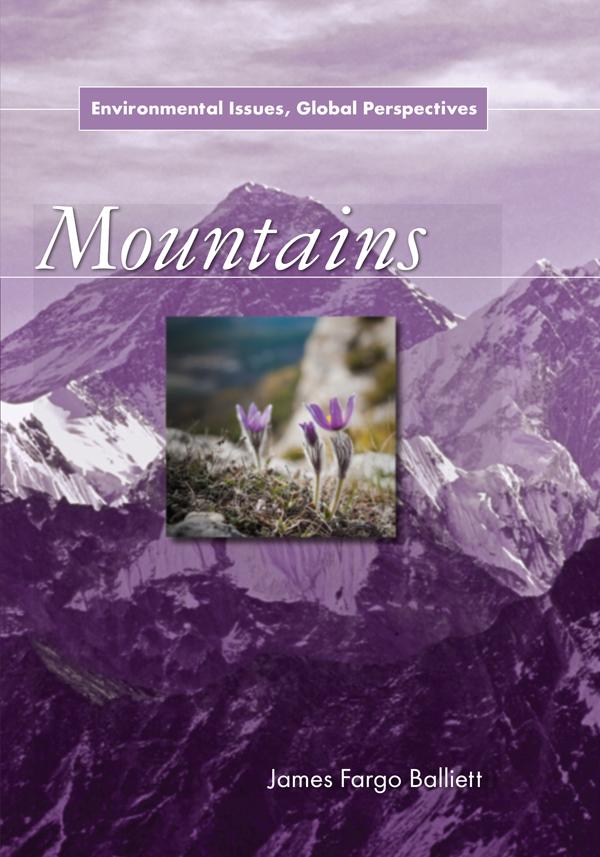
Always awe-inspiring, mountainous areas contain hundreds of millions of years of history, stretching back to the earliest continental landforms. This book shows how mountains are characterized by their distinctive geological, ecological, and biological conditions. Often, they are so large that they create their own weather patterns. They also store nearly one-third of the world’s freshwater—in the form of ice and snow—on their slopes. Despite their daunting size and often formidable climates, mountains are affected by growing local populations, as well as distant influences, such as air pollution and global climate change.
Three detailed case studies are presented. The first shows how global warming in East Africa is harming Mount Kenya’s regional population, which relies on mountain runoff to irrigate farms for subsistence crops. The second examines the fragile ecology of the South Island Mountain in New Zealand’s Southern Alps and how development threatens the region’s endemic plant and animal species. The third discusses the impact of mountain use over time in New Hampshire’s White Mountains, where management efforts have been used to limit the growing footprint of millions of annual visitors and alpine trekkers.
Paga facilmente con carta, Klarna, Apple Pay o Google Pay. Non sei soddisfatto? Hai sempre 14 giorni per il rimborso. Leggi di più nei nostri termini. Per qualsiasi domanda, scrivici a hello@memmo.org.
Memmo rende lo studio più facile, ovunque tu sia nel mondo. Qui trovi i tuoi libri di testo e strumenti di studio intelligenti, tutto in un unico posto: riassunti, quiz, podcast e flashcard. E poi c'è Ted, il tuo compagno di studio che risponde a ogni tua domanda. Oltre 50.000 studenti studiano già qui: è stato creato per aiutarti a imparare più velocemente e a stressarti meno.