
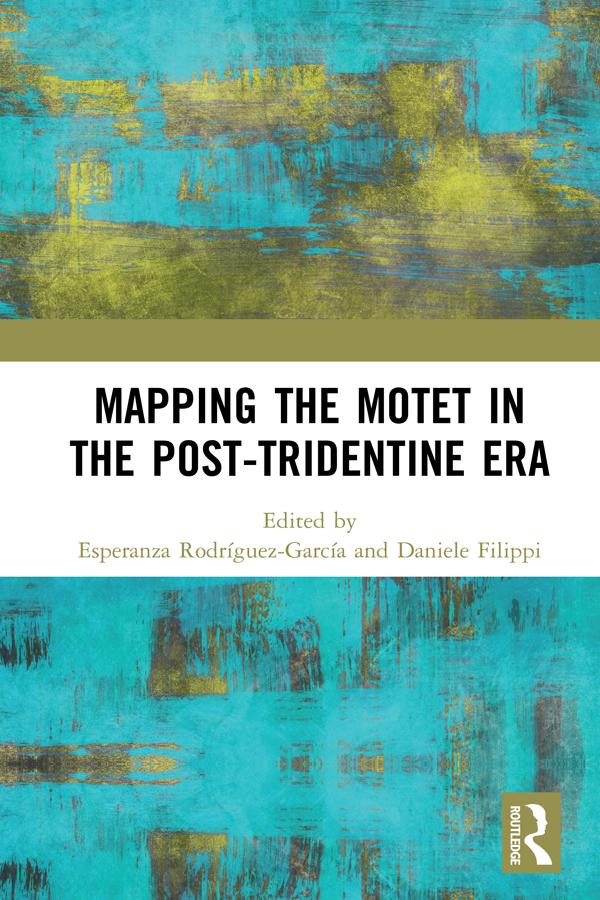
Mapping the Motet in the Post-Tridentine Era provides new dimensions to the discussion of the immense corpus of polyphonic motets produced and performed in the decades following the end of the Council of Trent in 1563. Beyond the genre’s rich connections with contemporary spiritual life and religious experience, the motet is understood here as having a multifaceted life in transmission, performance and reception. By analysing the repertoire itself, but also by studying its material life in books and accounts, in physical places and concrete sonic environments, and by investigating the ways in which the motet was listened to and talked about by contemporaries, the eleven chapters in this book redefine the cultural role of the genre. The motet, thanks to its own protean nature, not bound to any given textual, functional or compositional constraint, was able to convey cultural meanings powerfully, give voice to individual and collective identities, cross linguistic and confessional divides, and incarnate a model of learned and highly expressive musical composition. Case studies include considerations of composers (Palestrina, Victoria, Lasso), cities (Seville and Granada, Milan), books (calendrically ordered collections, non-liturgical music books) and special portions of the repertoire (motets pro defunctis, instrumental intabulations).
Paga facilmente con carta, Klarna, Apple Pay o Google Pay. Non sei soddisfatto? Hai sempre 14 giorni per il rimborso. Leggi di più nei nostri termini. Per qualsiasi domanda, scrivici a hello@memmo.org.
Memmo rende lo studio più facile, ovunque tu sia nel mondo. Qui trovi i tuoi libri di testo e strumenti di studio intelligenti, tutto in un unico posto: riassunti, quiz, podcast e flashcard. E poi c'è Ted, il tuo compagno di studio che risponde a ogni tua domanda. Oltre 50.000 studenti studiano già qui: è stato creato per aiutarti a imparare più velocemente e a stressarti meno.