
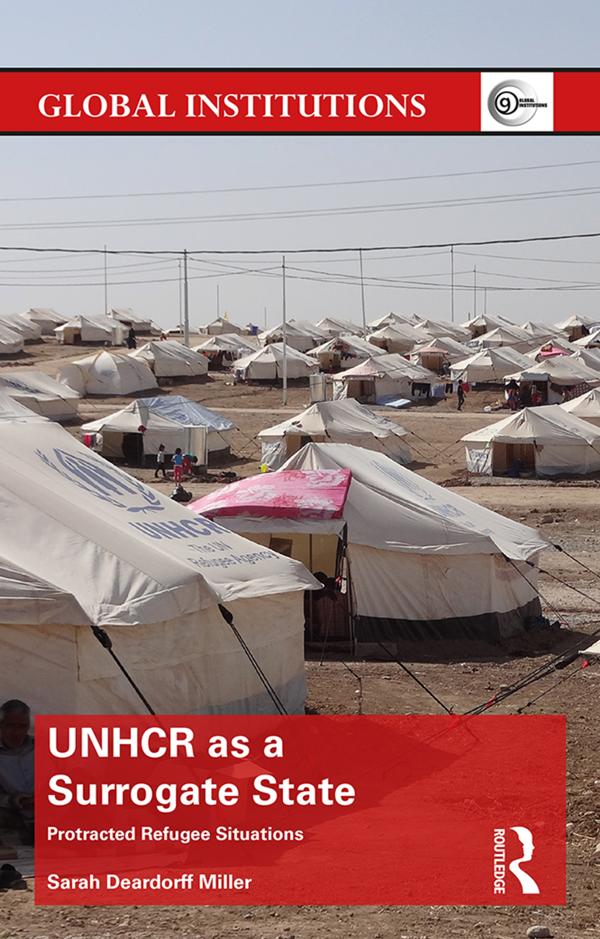
International organizations (IOs) that focus on refugees are finding themselves spread increasingly thin. As the scale of displacement reaches historic levels—protracted refugee situations now average 26 years—organizations are staying for years on end, often working well beyond their original mandates. In some cases, IOs may even act as a substitute for the state. This book considers the conditions under which surrogacy occurs and what it means for the organization’s influence on the state. It looks specifically at the United Nations High Commissioner for Refugees (UNHCR) as a surrogate state in protracted refugee situations in Kenya, Tanzania, and Uganda.
Drawing on international relations literature and empirical studies of UNHCR, Miller asks how and when UNHCR takes on surrogacy, and what effect this has on its ability to influence how a host state treats refugees. The book develops a framework for understanding IOs at the domestic level and presents a counterintuitive finding: IO surrogacy actually leads to less influence on the state. In other words, where UNHCR behaves like a state, it is less able to influence a host state’s refugee policies.
UNHCR provides an excellent example of an IO working on multiple levels, making this book of great interest to practitioners and policymakers working on refugee-related issues, and scholars of forced migration, international relations, international organizations, and UNHCR.
Paga facilmente con carta, Klarna, Apple Pay o Google Pay. Non sei soddisfatto? Hai sempre 14 giorni per il rimborso. Leggi di più nei nostri termini. Per qualsiasi domanda, scrivici a hello@memmo.org.
Memmo rende lo studio più facile, ovunque tu sia nel mondo. Qui trovi i tuoi libri di testo e strumenti di studio intelligenti, tutto in un unico posto: riassunti, quiz, podcast e flashcard. E poi c'è Ted, il tuo compagno di studio che risponde a ogni tua domanda. Oltre 50.000 studenti studiano già qui: è stato creato per aiutarti a imparare più velocemente e a stressarti meno.