
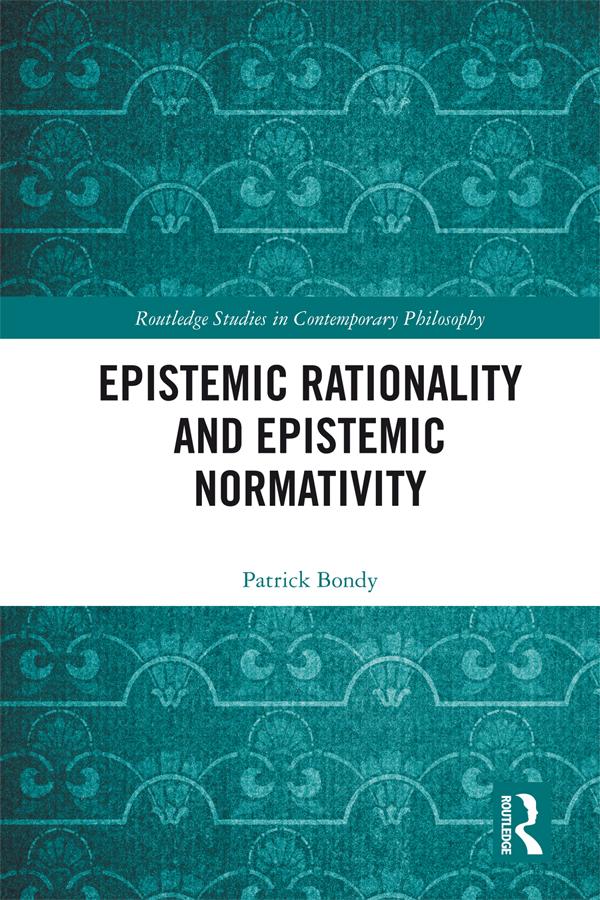
The aim of this book is to answer two important questions about the issue of normativity in epistemology: Why are epistemic reasons evidential and what makes epistemic reasons and rationality normative? Bondy's argument proceeds on the assumption that epistemic rationality goes hand in hand with basing beliefs on good evidence. The opening chapters defend a mental-state ontology of reasons, a deflationary account of how kinds of reasons are distinguished, and a deliberative guidance constraint on normative reasons. They also argue in favor of doxastic voluntarism—the view that beliefs are subject to our direct voluntary control—and embrace the controversial view that voluntarism bears directly on the question of what kinds of things count as reasons for believing. The final three chapters of the book feature a noteworthy critique of the instrumental conception of the nature of epistemic rationality, as well as a defense of the instrumental normativity of epistemic rationality. The final chapter defends the view that epistemic reasons and rationality are normative for us when we have normative reason to get to the truth with respect to some proposition, and it provides a response to the swamping problem for monistic accounts of value.
Paga facilmente con carta, Klarna, Apple Pay o Google Pay. Non sei soddisfatto? Hai sempre 14 giorni per il rimborso. Leggi di più nei nostri termini. Per qualsiasi domanda, scrivici a hello@memmo.org.
Memmo rende lo studio più facile, ovunque tu sia nel mondo. Qui trovi i tuoi libri di testo e strumenti di studio intelligenti, tutto in un unico posto: riassunti, quiz, podcast e flashcard. E poi c'è Ted, il tuo compagno di studio che risponde a ogni tua domanda. Oltre 50.000 studenti studiano già qui: è stato creato per aiutarti a imparare più velocemente e a stressarti meno.