
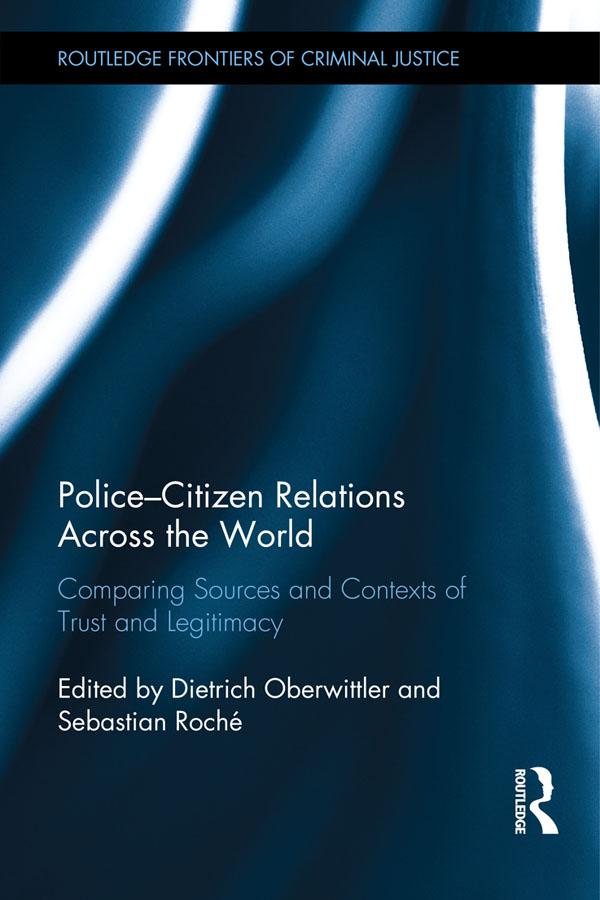
Police-citizen relations are in the public spotlight following outbursts of anger and violence. Such clashes often happen as a response to fatal police shootings, racial or ethnic discrimination, or the mishandling of mass protests. But even in such cases, citizens’ assessment of the police differs considerably across social groups. This raises the question of the sources and impediments of citizens’ trust and support for police. Why are police-citizen relations much better in some countries than in others? Are police-minority relations doomed to be strained? And which police practices and policing policies generate trust and legitimacy?
Research on police legitimacy has been centred on US experiences, and relied on procedural justice as the main theoretical approach. This book questions whether this approach is suitable and sufficient to understand public attitudes towards the police across different countries and regions of the world. This volume shows that the impact of macro-level conditions, of societal cleavages, and of state and political institutions on police-citizen relations has too often been neglected in contemporary research.
Building on empirical studies from around the world as well as cross-national comparisons, this volume considerably expands current perspectives on the sources of police legitimacy and citizens’ trust in the police. Combining the analysis of micro-level interactions with a perspective on the contextual framework and varying national conditions, the contributions to this book illustrate the strength of a broadened perspective and lead us to ask how specific national frameworks shape the experiences of policing.
Paga facilmente con carta, Klarna, Apple Pay o Google Pay. Non sei soddisfatto? Hai sempre 14 giorni per il rimborso. Leggi di più nei nostri termini. Per qualsiasi domanda, scrivici a hello@memmo.org.
Memmo rende lo studio più facile, ovunque tu sia nel mondo. Qui trovi i tuoi libri di testo e strumenti di studio intelligenti, tutto in un unico posto: riassunti, quiz, podcast e flashcard. E poi c'è Ted, il tuo compagno di studio che risponde a ogni tua domanda. Oltre 50.000 studenti studiano già qui: è stato creato per aiutarti a imparare più velocemente e a stressarti meno.