
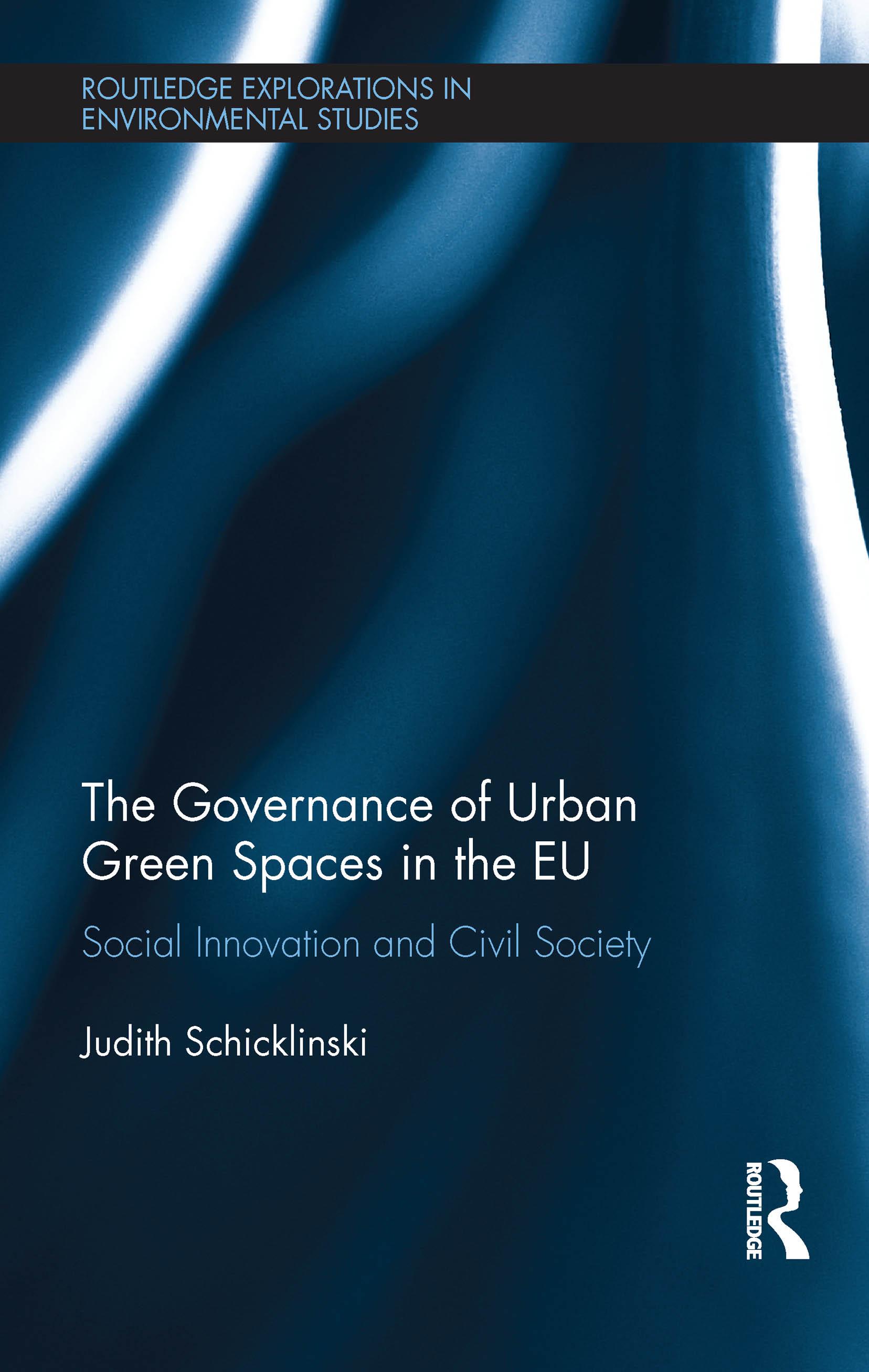
Across European cities the use of urban space is controversial and subject to diverging interests. On the one hand citizens are increasingly aware of the necessity for self-organising to reclaim green spaces. On the other hand local authorities have started to involve citizens in the governance of urban green spaces. While an increased level of citizen participation and conducive conditions for citizens’ self-organisation are a desirable development per se, the risk of functionalising civil society actors by the local authority for neoliberal city development must be kept in mind.
Drawing on qualitative and quantitative data collected in 29 European cities from all four European geographic regions, this book examines the governance of urban green spaces and urban food production, focusing on the contribution of citizen-driven activities. Over the course of the book, Schicklinski identifies best practice examples of successful collaboration between citizens and local government. The book concludes with policy recommendations with great practical value for local governance in European cities in times of the growth-turn.
This book will be of great relevance to students, scholars, and policy-makers with an interest in environmental governance, urban geography, and sustainable development.
Paga facilmente con carta, Klarna, Apple Pay o Google Pay. Non sei soddisfatto? Hai sempre 14 giorni per il rimborso. Leggi di più nei nostri termini. Per qualsiasi domanda, scrivici a hello@memmo.org.
Memmo rende lo studio più facile, ovunque tu sia nel mondo. Qui trovi i tuoi libri di testo e strumenti di studio intelligenti, tutto in un unico posto: riassunti, quiz, podcast e flashcard. E poi c'è Ted, il tuo compagno di studio che risponde a ogni tua domanda. Oltre 50.000 studenti studiano già qui: è stato creato per aiutarti a imparare più velocemente e a stressarti meno.