
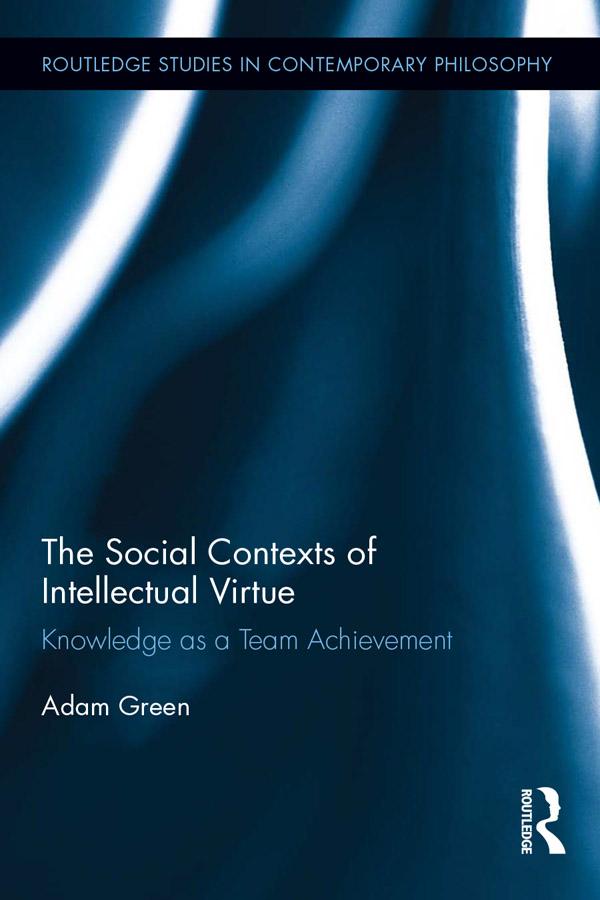
This book reconceives virtue epistemology in light of the conviction that we are essentially social creatures. Virtue is normally thought of as something that allows individuals to accomplish things on their own. Although contemporary ethics is increasingly making room for an inherently social dimension in moral agency, intellectual virtues continue to be seen in terms of the computing potential of a brain taken by itself. Thinking in these terms, however, seriously misconstrues the way in which our individual flourishing hinges on our collective flourishing.
Green’s account of virtue epistemology is based on the extended credit view, which conceives of knowledge as an achievement and broadens that focus to include team achievements in addition to individual ones. He argues that this view does a better job than alternatives of answering the many conceptual and empirical challenges for virtue epistemology that have been based on cases of testimony. The view also allows for a nuanced interaction with situationist psychology, dual processing models in cognitive science, and the extended mind literature in philosophy of mind. This framework provides a useful conceptual bridge between individual and group epistemology, and it has novel applications to the epistemology of disagreement, prejudice, and authority.
Paga facilmente con carta, Klarna, Apple Pay o Google Pay. Non sei soddisfatto? Hai sempre 14 giorni per il rimborso. Leggi di più nei nostri termini. Per qualsiasi domanda, scrivici a hello@memmo.org.
Memmo rende lo studio più facile, ovunque tu sia nel mondo. Qui trovi i tuoi libri di testo e strumenti di studio intelligenti, tutto in un unico posto: riassunti, quiz, podcast e flashcard. E poi c'è Ted, il tuo compagno di studio che risponde a ogni tua domanda. Oltre 50.000 studenti studiano già qui: è stato creato per aiutarti a imparare più velocemente e a stressarti meno.