
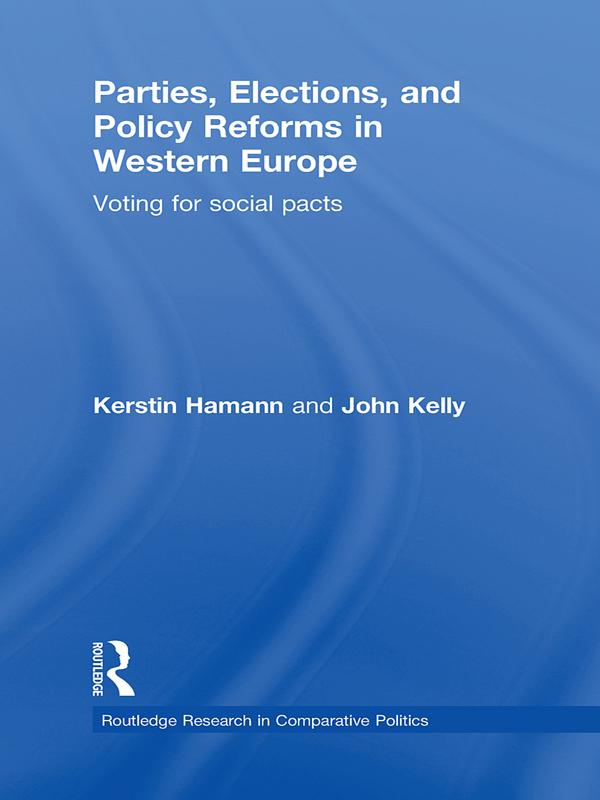
Social pacts – policy agreements between governments, labor unions and sometimes employer organizations – began to emerge in many countries in the 1980s. The most common explanations for social pacts tend to focus on economic factors, influenced by industrial relations institutions such as highly coordinated collective bargaining. This book presents, and tests, an alternative and complementary explanation highlighting the electoral calculations made by political parties in choosing pacts.
Using a dataset covering 16 European countries for the years 1980-2006, as well as eight in-depth country case studies, the authors argue that governments’ choice of social pacts or legislation is less influenced by economic problems, but is strongly influenced by electoral competition. Social pacts will be attractive when party leaders perceive them to be helpful in reducing the potential electoral costs of economic adjustment and wage restraint policies. Alternatively, parties may forgo negotiations with social partners and seek to impose such policies unilaterally if they believe that approach will yield electoral gain or minimize electoral costs.
By combining the separate literatures on political economy and party politics, the book sheds new light on the dynamics of social pacts in Western Europe. This book will be of interest to students and scholars of political science, economics, political economy, European Studies and comparative politics.
Paga facilmente con carta, Klarna, Apple Pay o Google Pay. Non sei soddisfatto? Hai sempre 14 giorni per il rimborso. Leggi di più nei nostri termini. Per qualsiasi domanda, scrivici a hello@memmo.org.
Memmo rende lo studio più facile, ovunque tu sia nel mondo. Qui trovi i tuoi libri di testo e strumenti di studio intelligenti, tutto in un unico posto: riassunti, quiz, podcast e flashcard. E poi c'è Ted, il tuo compagno di studio che risponde a ogni tua domanda. Oltre 50.000 studenti studiano già qui: è stato creato per aiutarti a imparare più velocemente e a stressarti meno.