
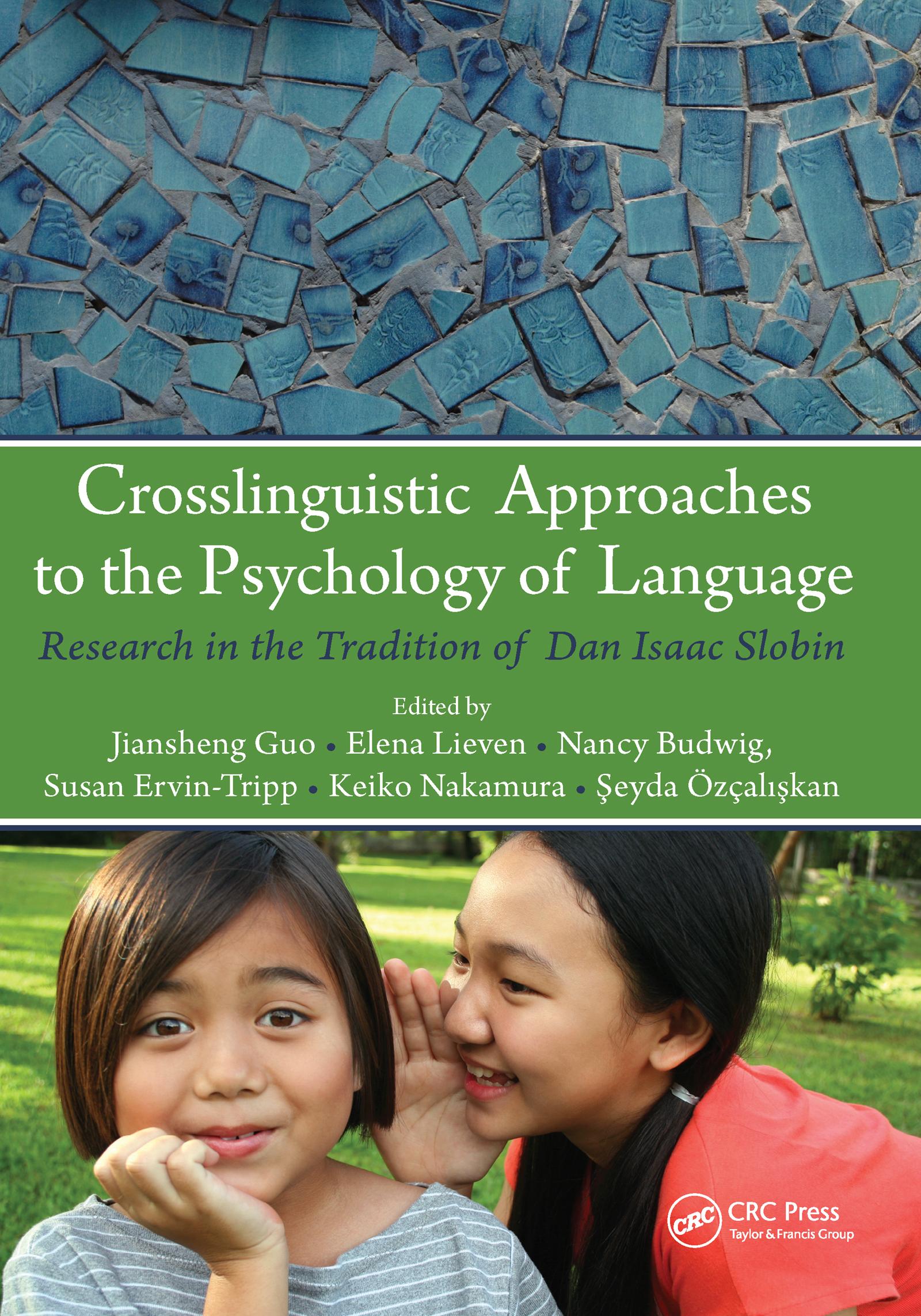
This volume covers state-of-the-art research in the field of crosslinguistic approaches to the psychology of language. The forty chapters cover a wide range of topics that represent the many research interests of a pioneer, Dan Isaac Slobin, who has been a major intellectual and creative force in the field of child language development, linguistics, and psycholinguistics for the past four decades.
Slobin has insisted on a rigorous, crosslinguistic approach in his attempt to identify universal developmental patterns in language learning, to explore the effects of particular types of languages on psycholinguistic processes, to determine the extent to which universals of language and language behavior are determined by modality (vocal/auditory vs. manual/visual) and, finally, to investigate the relation between linguistic and cognitive processes.
In this volume, researchers take up the challenge of the differences between languages to forward research in four major areas with which Slobin has been concerned throughout his career: language learning in crosslinguistic perspective (spoken and sign languages); the integration of language specific factors in narrative skill; theoretical issues in typology, language development and language change; and the relationship between language and cognition.
All chapters are written by leading researchers currently working in these fields, who are Slobin's colleagues, collaborators or former students in linguistics, psychology, anthropology, and cognitive science. Each section starts with an introductory chapter that connects the themes of the chapters and reviews Slobin's contribution in the context of past research trends and future directions. The whole volume focuses squarely on the central argument: universals of human language and of its development are embodied and revealed in its diverse manifestations and utilization.
Crosslinguistic Approaches to the Study of Language is a key resource for those interested in the range of differences between languages and how this impacts on learning, cognition and language change, and a tribute to Dan Slobin's momentous contribution to the field.
Paga facilmente con carta, Klarna, Apple Pay o Google Pay. Non sei soddisfatto? Hai sempre 14 giorni per il rimborso. Leggi di più nei nostri termini. Per qualsiasi domanda, scrivici a hello@memmo.org.
Memmo rende lo studio più facile, ovunque tu sia nel mondo. Qui trovi i tuoi libri di testo e strumenti di studio intelligenti, tutto in un unico posto: riassunti, quiz, podcast e flashcard. E poi c'è Ted, il tuo compagno di studio che risponde a ogni tua domanda. Oltre 50.000 studenti studiano già qui: è stato creato per aiutarti a imparare più velocemente e a stressarti meno.