
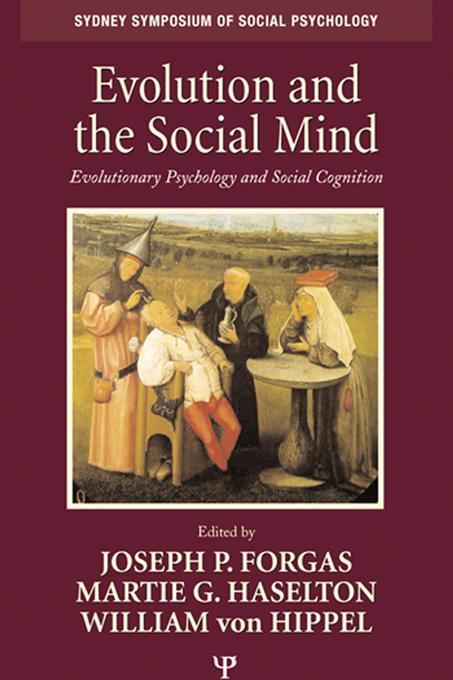
This book seeks to combine the study of human social cognition - the way we think, decide, plan and analyze social situations - with an evolutionary framework that considers these activities in light of evolutionary adaptations for solving problems of survival faced by our ancestors over thousands of generations. The chapters report recent research and theories illustrating how evolutionary principles can shed new light on the subtle and often subconscious ways that cognitive mechanisms guide peoples’ thoughts, memories, judgments, attitudes and behaviors in social life.
The contributors to this volume, who are leading researchers in their fields, seek answers to such intriguing questions as: how can evolutionary principles help to explain human beliefs, attitudes, judgments, prejudice, and group preferences? Are there benefits to behaving unpredictably? Why are prototypical faces more attractive than atypical ones? How do men and women think about, and select potential mates? What are the adaptive functions of negative affect? What are the evolutionary influences on the way people think about and respond to social exclusion and ostracism?
Evolution and the Social Mind offers a highly integrated and representative coverage of this emerging field, and is suitable as a textbook in advanced courses dealing with social cognition and evolutionary psychology.
Paga facilmente con carta, Klarna, Apple Pay o Google Pay. Non sei soddisfatto? Hai sempre 14 giorni per il rimborso. Leggi di più nei nostri termini. Per qualsiasi domanda, scrivici a hello@memmo.org.
Memmo rende lo studio più facile, ovunque tu sia nel mondo. Qui trovi i tuoi libri di testo e strumenti di studio intelligenti, tutto in un unico posto: riassunti, quiz, podcast e flashcard. E poi c'è Ted, il tuo compagno di studio che risponde a ogni tua domanda. Oltre 50.000 studenti studiano già qui: è stato creato per aiutarti a imparare più velocemente e a stressarti meno.