
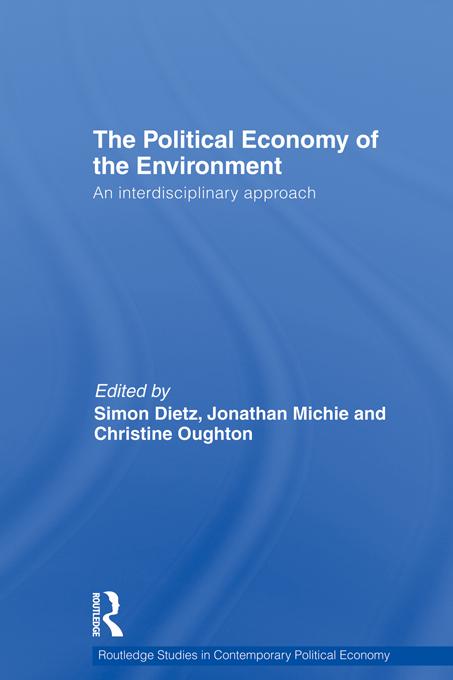
This book is the culmination of several years work by a group of academics, policy-makers and other professionals looking to understand how alternative economic thinking – and indeed thinking from quite different social-scientific disciplines – could enhance the mainstream economic approach to environmental and natural-resource problems. Of the editors, Dietz comes from the mainstream economics tradition, while Michie and Oughton draw explicitly on institutional and evolutionary economics. The various authors represent a range of disciplinary backgrounds and approaches. This book draws on the strengths of each and all of these approaches to analyse environmental issues and what can be done to tackle these through corporate and public policy.
The book argues that the need for an inter-disciplinary approach. Two themes which emerge repeatedly throughout the book are the need for an interdisciplinary theory of technological change, and the need for a similarly interdisciplinary approach to the study of human behaviour and how it influences both production and consumption choices. The two themes are of course related. Resolving environmental questions requires an understanding of their nature, of their causes and, to the extent that they are anthropogenic, of how to change human behaviour. These fundamental issues are the focus of the four chapters that form Part 1 of this volume. The remainder of the volume develops them in more detail.
.
Paga facilmente con carta, Klarna, Apple Pay o Google Pay. Non sei soddisfatto? Hai sempre 14 giorni per il rimborso. Leggi di più nei nostri termini. Per qualsiasi domanda, scrivici a hello@memmo.org.
Memmo rende lo studio più facile, ovunque tu sia nel mondo. Qui trovi i tuoi libri di testo e strumenti di studio intelligenti, tutto in un unico posto: riassunti, quiz, podcast e flashcard. E poi c'è Ted, il tuo compagno di studio che risponde a ogni tua domanda. Oltre 50.000 studenti studiano già qui: è stato creato per aiutarti a imparare più velocemente e a stressarti meno.