
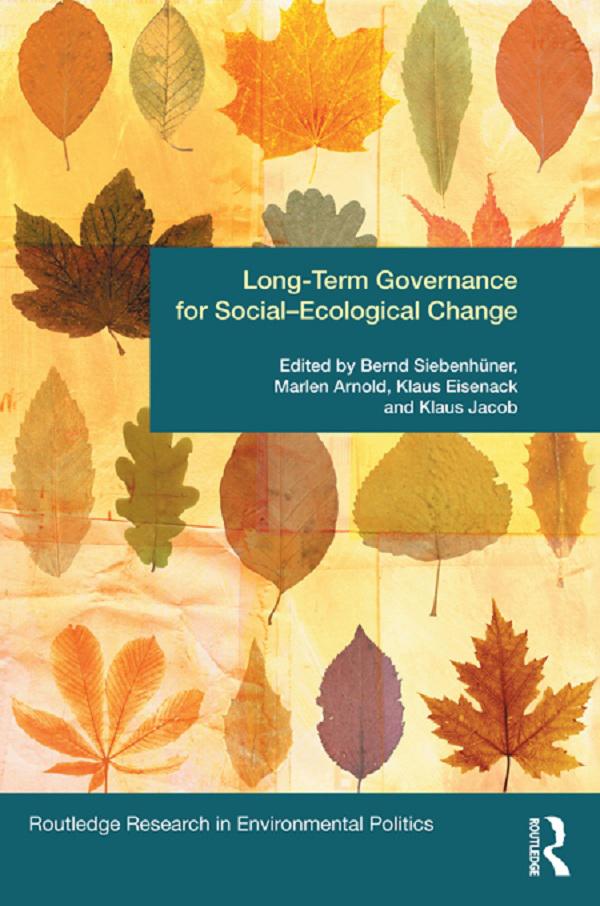
The book discusses how to tackle long-term social and ecological problems by using different environmental governance approaches to creating sustainable development. It explores opportunities and requirements for the governance of long-term problems, and examines how to achieve a lasting transformation.
When investments are made to mitigate climate change or preserve biodiversity, future generations can reap benefits from the efforts of the present generation. However, long-term social-ecological change towards sustainable development is disrupted by the fact that the costs and benefits of action are seen by different generations. With a global focus that includes case studies from Europe, Asia, Africa, and North America, this book attempts to address the difficulty of developing and implementing effective long-term governance solutions. The authors examine what distinguishes long‐term problems from other policy problems, what governance responses are available and used, and how different governance mechanisms, namely economic incentives, participation, as well as knowledge and learning, help to address them.
Combining the perspectives on the different governance approaches and featuring cases studies on national, regional and global issues, Long-Term Governance for Social-Ecological Change will be of interest to policy-makers, students and scholars of global environmental governance, development, sustainability, politics, economics, law and sociology.
Paga facilmente con carta, Klarna, Apple Pay o Google Pay. Non sei soddisfatto? Hai sempre 14 giorni per il rimborso. Leggi di più nei nostri termini. Per qualsiasi domanda, scrivici a hello@memmo.org.
Memmo rende lo studio più facile, ovunque tu sia nel mondo. Qui trovi i tuoi libri di testo e strumenti di studio intelligenti, tutto in un unico posto: riassunti, quiz, podcast e flashcard. E poi c'è Ted, il tuo compagno di studio che risponde a ogni tua domanda. Oltre 50.000 studenti studiano già qui: è stato creato per aiutarti a imparare più velocemente e a stressarti meno.