
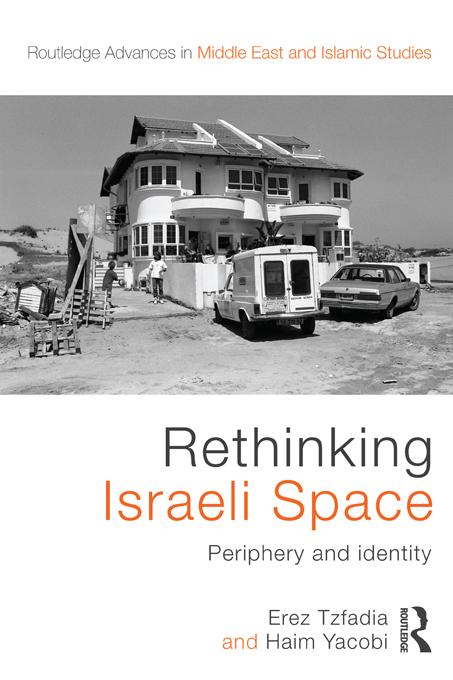
This book sheds light on the production of Israeli space and the politics of Jewish and Arab cities. The authors’ postcolonial approach deals with the notion of periphery and peripherality, covering issues of spatial protest, urban policy and urban planning.
Discussing periphery as a political, social and spatial phenomenon and both a product and a process manufactured by power mechanisms, the authors show how the state, the regime of citizenship, the capitalist logic, and the logic of ethnonationalism have all resulted in ethno-class division and stratification, which have been shaped by spatial policy. Rather than using the term periphery to describe an economic, geographical and social situation in which disadvantaged communities are located, this critical examination addresses the traditionally passive dimension of this term suggest that the reality of peripheral communities and spaces is rather more conflicted and controversial.
The multidisciplinary approach taken by this book means it will be a valuable contribution to the fields of planning theory, political science and public policy, urban sociology, critical geography and Middle East studies.
Paga facilmente con carta, Klarna, Apple Pay o Google Pay. Non sei soddisfatto? Hai sempre 14 giorni per il rimborso. Leggi di più nei nostri termini. Per qualsiasi domanda, scrivici a hello@memmo.org.
Memmo rende lo studio più facile, ovunque tu sia nel mondo. Qui trovi i tuoi libri di testo e strumenti di studio intelligenti, tutto in un unico posto: riassunti, quiz, podcast e flashcard. E poi c'è Ted, il tuo compagno di studio che risponde a ogni tua domanda. Oltre 50.000 studenti studiano già qui: è stato creato per aiutarti a imparare più velocemente e a stressarti meno.