
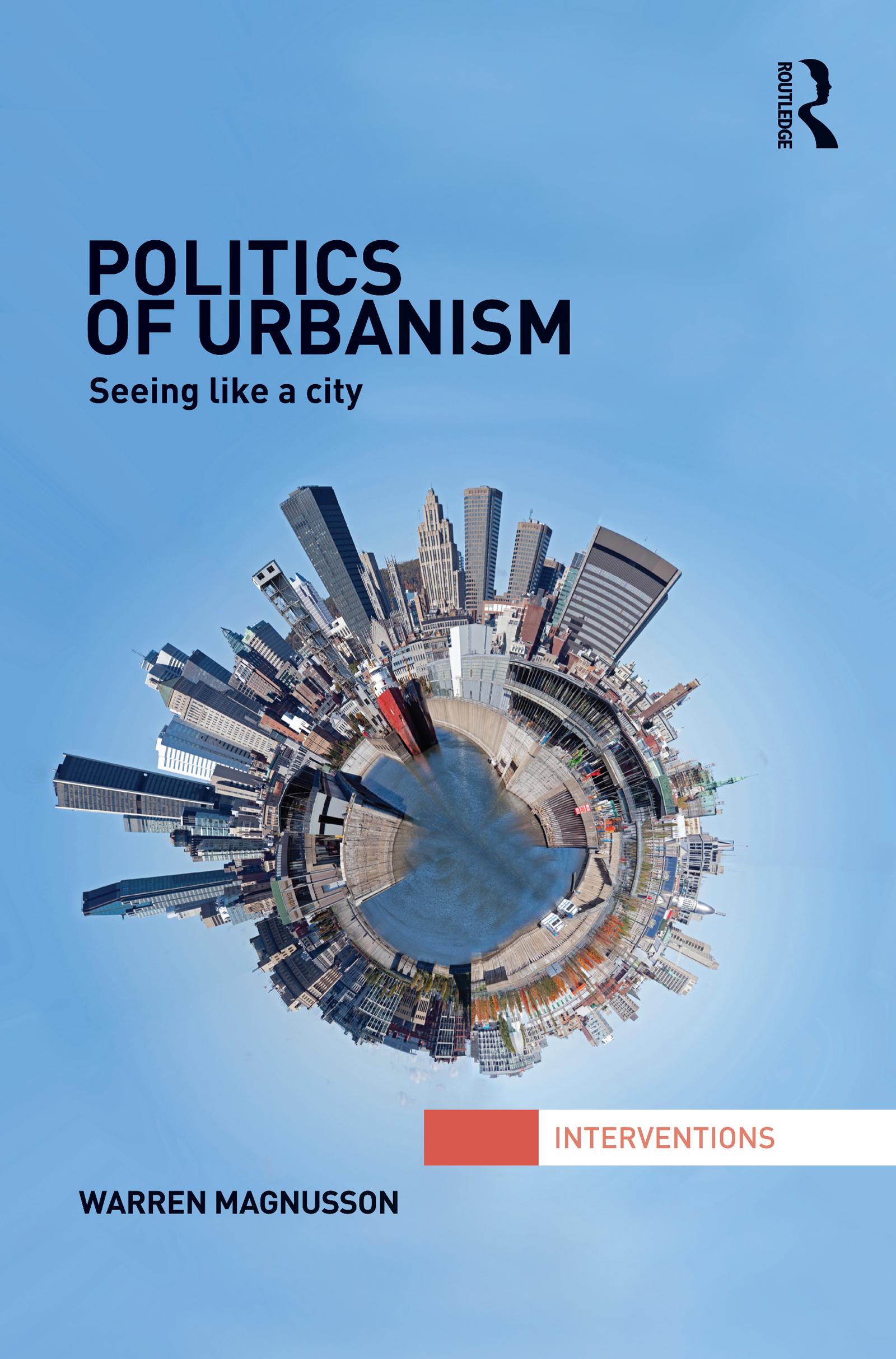
To see like a city, rather than seeing like a state, is the key to understanding modern politics. In this book, Magnusson draws from theorists such as Weber, Wirth, Hayek, Jacobs, Sennett, and Foucault to articulate some of the ideas that we need to make sense of the city as a form of political order.
Locally and globally, the city exists by virtue of complicated patterns of government and self-government, prompted by proximate diversity. A multiplicity of authorities in different registers is typical. Sovereignty, although often claimed, is infinitely deferred. What emerges by virtue of self-organization is not susceptible to control by any central authority, and so we are impelled to engage politically in a world that does not match our expectations of sovereignty. How then are we are to engage realistically and creatively? We have to begin from where we are if we are to understand the possibilities.
Building on traditions of political and urban theory in order to advance a new interpretation of the role of cities/urbanism in contemporary political life, this work will be of great interest to scholars of political theory and urban theory, international relations theory and international relations.
Paga facilmente con carta, Klarna, Apple Pay o Google Pay. Non sei soddisfatto? Hai sempre 14 giorni per il rimborso. Leggi di più nei nostri termini. Per qualsiasi domanda, scrivici a hello@memmo.org.
Memmo rende lo studio più facile, ovunque tu sia nel mondo. Qui trovi i tuoi libri di testo e strumenti di studio intelligenti, tutto in un unico posto: riassunti, quiz, podcast e flashcard. E poi c'è Ted, il tuo compagno di studio che risponde a ogni tua domanda. Oltre 50.000 studenti studiano già qui: è stato creato per aiutarti a imparare più velocemente e a stressarti meno.