
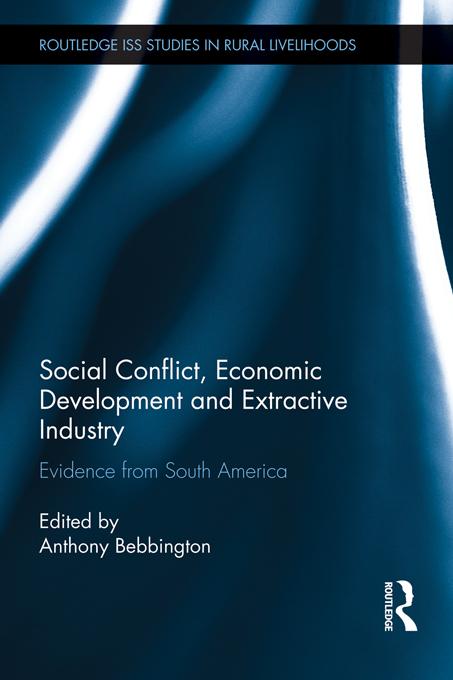
The extraction of minerals, oil and gas has a long and ambiguous history in development processes – in North America, Europe, Latin America and Australasia. Extraction has yielded wealth, regional identities and in some cases capital for industrialization. In other cases its main heritages have been social conflict, environmental damage and underperforming national economies. As the extractive economy has entered another boom period over the last decade, not least in Latin America, the countries in which this boom is occurring are challenged to interpret this ambiguity. Will the extractive industry yield, for them, economic development, or will its main gifts be ones of conflict, degradation and unequal forms of growth.
This book speaks directly to this question and to the different ways in which Latin American countries are responding to the challenge of extractive industry. The contributors are a mixture of geographers, economists, political scientists, development experts and anthropologists, who all draw on sustained field work in the region. By digging deep into both national and local experiences with extractive industry they demonstrate the ways in which it transforms economies, societies, polities and environments. They pay particular attention to the social conflict that extraction consistently produces, and they ask how far this conflict might usher in political and institutional changes that could lead to a more productive relationship between extraction and development. They also ask whether the existence of left-of-centre governments in the region changes the relationships between extractive industry and development.
The book makes clear the immense difficulties that countries and regional societies face in harnessing extractive industry for the collective good. For the most part the findings question the wisdom of the development model that many countries in the region have taken up and which emphasises the productive roles of mining and hydrocarbon industries. The book should be of interest to students and researchers of Development Studies, Geography, Politics and Political Economy, as well as Anthropology.
Paga facilmente con carta, Klarna, Apple Pay o Google Pay. Non sei soddisfatto? Hai sempre 14 giorni per il rimborso. Leggi di più nei nostri termini. Per qualsiasi domanda, scrivici a hello@memmo.org.
Memmo rende lo studio più facile, ovunque tu sia nel mondo. Qui trovi i tuoi libri di testo e strumenti di studio intelligenti, tutto in un unico posto: riassunti, quiz, podcast e flashcard. E poi c'è Ted, il tuo compagno di studio che risponde a ogni tua domanda. Oltre 50.000 studenti studiano già qui: è stato creato per aiutarti a imparare più velocemente e a stressarti meno.