
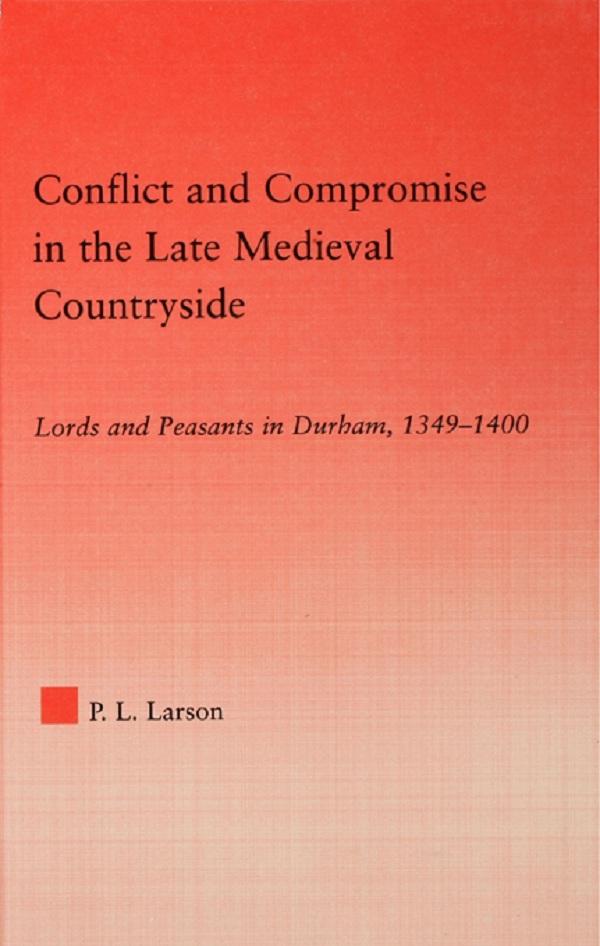
Larson examines the changing relations between lords and peasants in post-Black Death Durham. This was a time period of upheaval and change, part of the transition from ‘medieval’ to ‘modern.’ Many historians have argued about the nature of this change and its causes, often putting forth a single all-encompassing model; Larson presses for the importance of individual choice and action, resulting in a flexible, human framework that provides a more appropriate explanation for the many paths followed in this period.
The theoretical side is balanced by an ‘on the ground’ examination of rural life in Durham-- an attempt to capture the raw emotions and decisions of the period. No one has really examined this; most studies are speculative, relying on theory or statistics, rather than tracing the history of real people, both in the immediate aftermath of the plague, and in the longer term. Durham is fortunate in that records survive in abundance for this period; most other studies of rural society end at 1300 or 1348.
As such, this book fills a major gap in medieval English history while at the same time grappling with major theories of change for this transformative period.
Paga facilmente con carta, Klarna, Apple Pay o Google Pay. Non sei soddisfatto? Hai sempre 14 giorni per il rimborso. Leggi di più nei nostri termini. Per qualsiasi domanda, scrivici a hello@memmo.org.
Memmo rende lo studio più facile, ovunque tu sia nel mondo. Qui trovi i tuoi libri di testo e strumenti di studio intelligenti, tutto in un unico posto: riassunti, quiz, podcast e flashcard. E poi c'è Ted, il tuo compagno di studio che risponde a ogni tua domanda. Oltre 50.000 studenti studiano già qui: è stato creato per aiutarti a imparare più velocemente e a stressarti meno.