
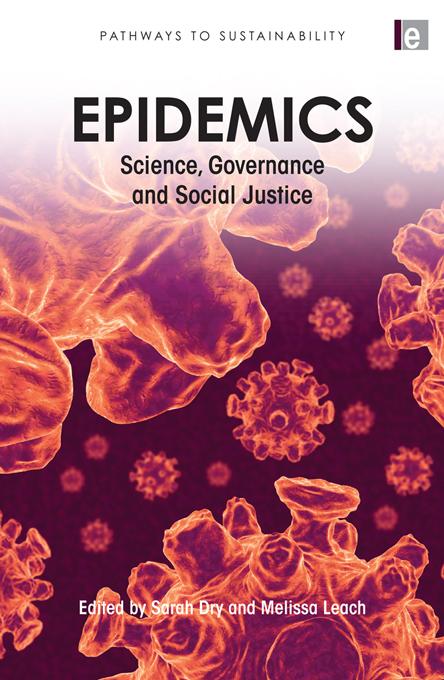
Recent disease events such as SARS, H1N1 and avian influenza, and haemorrhagic fevers have focussed policy and public concern as never before on epidemics and so-called 'emerging infectious diseases'. Understanding and responding to these often unpredictable events have become major challenges for local, national and international bodies. All too often, responses can become restricted by implicit assumptions about who or what is to blame that may not capture the dynamics and uncertainties at play in the multi-scale interactions of people, animals and microbes. As a result, policies intended to forestall epidemics may fail, and may even further threaten health, livelihoods and human rights.
The book takes a unique approach by focusing on how different policy-makers, scientists, and local populations construct alternative narratives-accounts of the causes and appropriate responses to outbreaks- about epidemics at the global, national and local level. The contrast between emergency-oriented, top-down responses to what are perceived as potentially global outbreaks and longer-term approaches to diseases, such as AIDS, which may now be considered endemic, is highlighted. Case studies-on avian influenza, SARS, obesity, H1N1 influenza, HIV/AIDS, tuberculosis, and haemorrhagic fevers-cover a broad historical, geographical and biological range.
As this book explores, it is often the most vulnerable members of a population-the poor, the social excluded and the already ill-who are likely to suffer most from epidemic diseases. At the same time, they may be less likely to benefit from responses that may be designed from a global perspective that neglects social, ecological and political conditions on the ground. This book aims to bring the focus back to these marginal populations to reveal the often unintended consequences of current policy responses to epidemics. Important implications emerge - for how epidemics are thought about and represented; for how surveillance and response is designed; and for whose knowledge and perspectives should be included.
Published in association with the Economic and Social Research Council (ESRC)
Paga facilmente con carta, Klarna, Apple Pay o Google Pay. Non sei soddisfatto? Hai sempre 14 giorni per il rimborso. Leggi di più nei nostri termini. Per qualsiasi domanda, scrivici a hello@memmo.org.
Memmo rende lo studio più facile, ovunque tu sia nel mondo. Qui trovi i tuoi libri di testo e strumenti di studio intelligenti, tutto in un unico posto: riassunti, quiz, podcast e flashcard. E poi c'è Ted, il tuo compagno di studio che risponde a ogni tua domanda. Oltre 50.000 studenti studiano già qui: è stato creato per aiutarti a imparare più velocemente e a stressarti meno.