
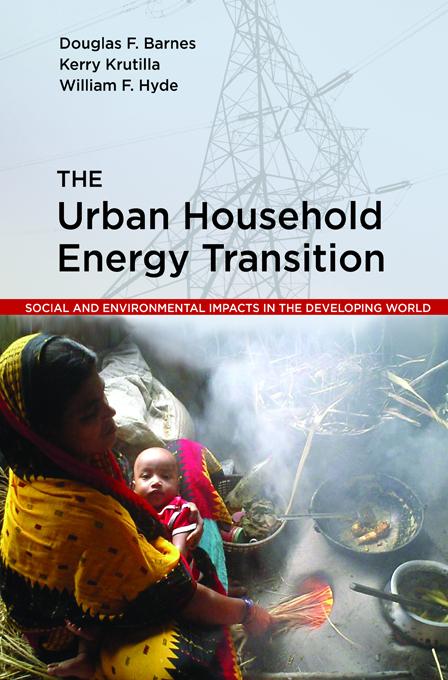
As cities in developing countries grow and become more prosperous, energy use shifts from fuelwood to fuels like charcoal, kerosene, and coal, and, ultimately, to fuels such as liquid petroleum gas, and electricity. Energy use is not usually considered as a social issue. Yet, as this book demonstrates, the movement away from traditional fuels has a strong socio-economic dimension, as poor people are the last to attain the benefits of using modern energy. The result is that health risks from the continued use of wood fuel fall most heavily on the poor, and indoor pollution from wood stoves has its greatest effect on women and children who cook and spend much more of their time indoors. Barnes, Krutilla, and Hyde provide the first worldwide assessment of the energy transition as it occurs in urban households, drawing upon data collected by the World Bank Energy Sector Management Assistance Programme (ESMAP). From 1984-2000, the program conducted over 25,000 household energy surveys in 45 cities spanning 12 countries and 3 continents. Additionally, GIS mapping software was used to compile a biomass database of vegetation patterns surrounding 34 cities. Using this rich set of geographic, biological, and socioeconomic data, the authors describe problems and policy options associated with each stage in the energy transition. The authors show how the poorest are most vulnerable to changes in energy markets and demonstrate how the collection of biomass fuel contributes to deforestation. Their book serves as an important contribution to development studies, and as a guide for policymakers hoping to encourage sustainable energy markets and an improved quality of life for growing urban populations.
Paga facilmente con carta, Klarna, Apple Pay o Google Pay. Non sei soddisfatto? Hai sempre 14 giorni per il rimborso. Leggi di più nei nostri termini. Per qualsiasi domanda, scrivici a hello@memmo.org.
Memmo rende lo studio più facile, ovunque tu sia nel mondo. Qui trovi i tuoi libri di testo e strumenti di studio intelligenti, tutto in un unico posto: riassunti, quiz, podcast e flashcard. E poi c'è Ted, il tuo compagno di studio che risponde a ogni tua domanda. Oltre 50.000 studenti studiano già qui: è stato creato per aiutarti a imparare più velocemente e a stressarti meno.
Potrebbe interessarti anche
Acquista il libro0