
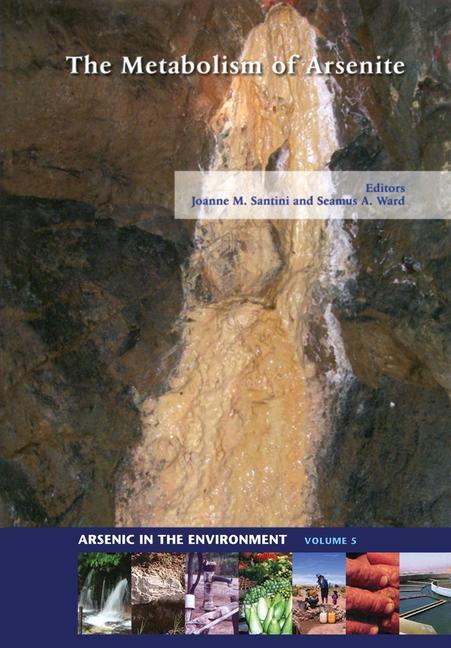
Up to 200 million people in 70 countries are at risk from drinking water contaminated with arsenic, which is a major cause of chronic debilitating illnesses and fatal cancers. Until recently little was known about the mobility of arsenic, and how redox transformations determined its movement into or out of water supplies. Although human activities contribute to the release of arsenic from minerals, it is now clear that bacteria are responsible for most of the redox transformation of arsenic in the environment. Bacterial oxidation of arsenite (to the less mobile arsenate) has been known since 1918, but it was not until 2000 that a bacterium was shown to gain energy from this process. Since then a wide range of arsenite-oxidizing bacteria have been isolated, including aerobes and anaerobes; heterotrophs and autotrophs; thermophiles, mesophiles and psychrophiles. This book reviews recent advances in the study of such bacteria. After a section on background—geology and health issues—the main body of the book concerns the cellular machinery of arsenite oxidation. It concludes by examining possible applications. Topics treated are:
- The geology and cycling of arsenic
- Arsenic and disease
- Arsenite oxidation: physiology, enzymes, genes, and gene regulation.
- Community genomics and functioning, and the evolution of arsenite oxidation
- Microbial arsenite oxidation in bioremediation
- Biosensors for arsenic in drinking water and industrial effluents
Paga facilmente con carta, Klarna, Apple Pay o Google Pay. Non sei soddisfatto? Hai sempre 14 giorni per il rimborso. Leggi di più nei nostri termini. Per qualsiasi domanda, scrivici a hello@memmo.org.
Memmo rende lo studio più facile, ovunque tu sia nel mondo. Qui trovi i tuoi libri di testo e strumenti di studio intelligenti, tutto in un unico posto: riassunti, quiz, podcast e flashcard. E poi c'è Ted, il tuo compagno di studio che risponde a ogni tua domanda. Oltre 50.000 studenti studiano già qui: è stato creato per aiutarti a imparare più velocemente e a stressarti meno.