
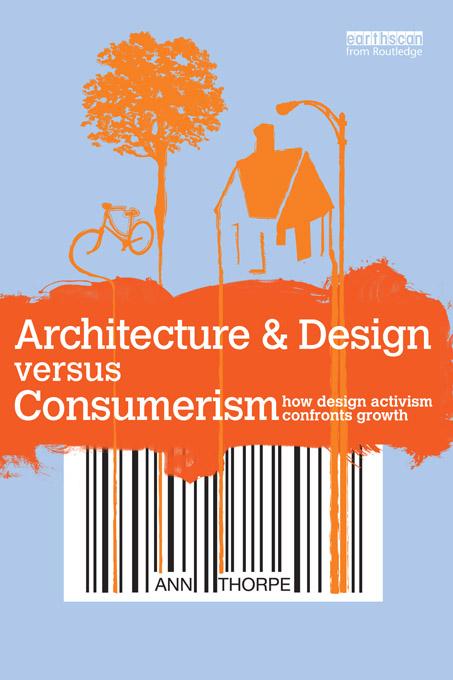
The mentality that consumerism and economic growth are cure-alls is one of the biggest obstacles to real sustainability, but any change seems impossible, unthinkable. Our contemporary paradox finds us relying for our well being on consumer-driven economic growth that we actually can’t afford — not in environmental, economic or social terms. Although architecture and design have long been seen as engines for consumerism and growth, increasing numbers of designers are concerned about the problems resulting from growth. But designers face a paradox of their own; in scenarios of sustainable consumption, where people consume or build significantly less, what will be left for designers to do?
This book, informed by recent research into the viability of a "steady state" economy, sets an agenda for addressing the designer’s paradox of sustainable consumption. The agenda includes ways that architecture and design can help transition us towards a new kind of economy that prioritizes real wellbeing rather than economic growth. Packed with examples and illustrations, the book argues that taking action, or activism, is an important but so far underexplored way for architects and designers to confront consumerism.
The first chapters explore how economic growth and consumerism shape and are shaped by the professions of architecture, product, and landscape design and how we can understand the problem of consumerism as four main challenges that designers are already addressing. The book maps out the main issues surrounding the development of metrics that designers and others can use to measure wellbeing, instead of simply measuring economic growth. The second half of the book looks at how design activism works and its connection to growth and consumerist issues. These chapters examine how activist practices are financed, highlight five specific methods that designers use in working for social change, and investigate the power of these methods. The book concludes with a consideration of what design’s role might be in a "post-growth" society.
Paga facilmente con carta, Klarna, Apple Pay o Google Pay. Non sei soddisfatto? Hai sempre 14 giorni per il rimborso. Leggi di più nei nostri termini. Per qualsiasi domanda, scrivici a hello@memmo.org.
Memmo rende lo studio più facile, ovunque tu sia nel mondo. Qui trovi i tuoi libri di testo e strumenti di studio intelligenti, tutto in un unico posto: riassunti, quiz, podcast e flashcard. E poi c'è Ted, il tuo compagno di studio che risponde a ogni tua domanda. Oltre 50.000 studenti studiano già qui: è stato creato per aiutarti a imparare più velocemente e a stressarti meno.