
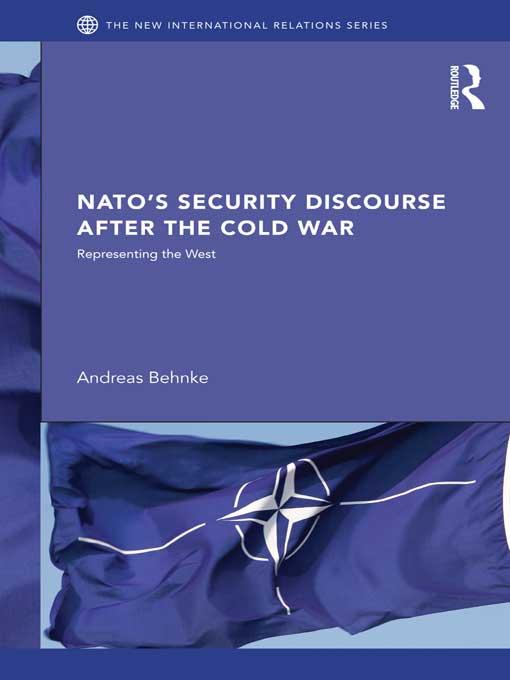
This book analyses the way in which the North Atlantic Treaty Organisation (NATO) defines the West after the end of the Cold War and the demise of its constitutive ‘Other’, the Soviet Union.
The book offers a theoretical critique of liberal approaches to security, and focuses on NATO’s construction of four geo-cultural spaces that are the sites of particular dangers or threats, which cause these spaces to be defined as the ‘enemy’ of the West. While this forges a collective Western identity, effectively achieved in the 1990s, the book also includes an analysis of NATO’s involvement in the War on Terror – an involvement in which the Alliance fails to define a coherent West, thereby undermining the very source of its long-standing political cohesion. Contributing to theoretical development within Critical Security Studies, Behnke draws on a variety of approaches to provide an analytical framework that examines the political as well as philosophical problems associated with NATO’s performance of security and identity, concluding that in the modern era of globalized, non-territorialized threats and dangers, NATO’s traditional spatial understanding of security is no longer effective given the new dynamics of Western security.
NATO’s Security Discourse after the Cold War will be of great interest to students and researchers of International Relations, Critical Security Studies and International Organizations.
Paga facilmente con carta, Klarna, Apple Pay o Google Pay. Non sei soddisfatto? Hai sempre 14 giorni per il rimborso. Leggi di più nei nostri termini. Per qualsiasi domanda, scrivici a hello@memmo.org.
Memmo rende lo studio più facile, ovunque tu sia nel mondo. Qui trovi i tuoi libri di testo e strumenti di studio intelligenti, tutto in un unico posto: riassunti, quiz, podcast e flashcard. E poi c'è Ted, il tuo compagno di studio che risponde a ogni tua domanda. Oltre 50.000 studenti studiano già qui: è stato creato per aiutarti a imparare più velocemente e a stressarti meno.