
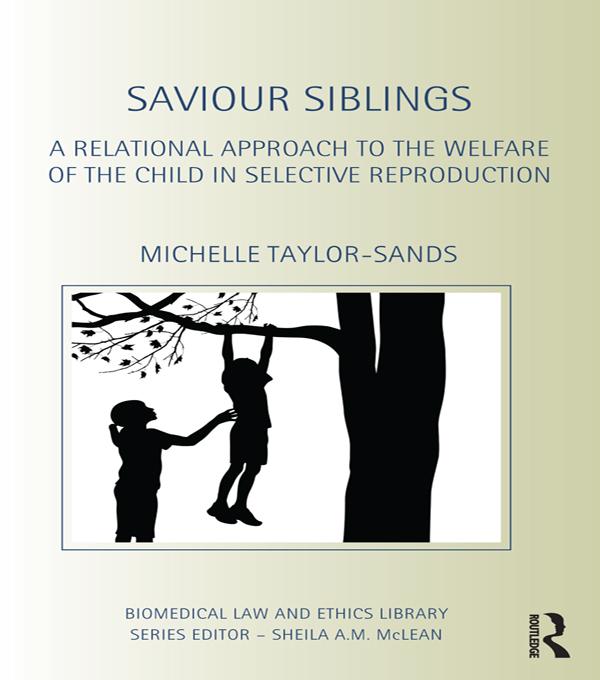
Genetic screening technologies involving pre-implantation genetic diagnosis (PGD) raise particular issues about selective reproduction and the welfare of the child to be born. How does selection impact on the identity of the child who is born? Are children who are selected for a particular purpose harmed or treated as commodities? How far should the state interfere with parents’ reproductive choices?
Currently, concerns about the welfare of the child in selective reproduction have focused on the individual interests of the child to be born. This book re-evaluates the welfare of the child through the controversial topic of saviour sibling selection. Drawing on relational feminist and communitarian ethics, Michelle Taylor-Sands argues that the welfare of the child to be born is inextricably linked with the welfare of his/her family. The author proposes a relational model for selective reproduction based on a broad conception of the welfare of the child that includes both individual and collective family interests. By comparing regulation in the UK and Australia, the book maps out how law and policy might support a relational model for saviour sibling selection.
With an interdisciplinary focus, Saviour Siblings: A Relational Approach to the Welfare of the Child in Selective Reproduction will be of particular interest to academics and students of bioethics and law as well as practitioners and policymakers concerned with the ethics of selective reproduction.
Paga facilmente con carta, Klarna, Apple Pay o Google Pay. Non sei soddisfatto? Hai sempre 14 giorni per il rimborso. Leggi di più nei nostri termini. Per qualsiasi domanda, scrivici a hello@memmo.org.
Memmo rende lo studio più facile, ovunque tu sia nel mondo. Qui trovi i tuoi libri di testo e strumenti di studio intelligenti, tutto in un unico posto: riassunti, quiz, podcast e flashcard. E poi c'è Ted, il tuo compagno di studio che risponde a ogni tua domanda. Oltre 50.000 studenti studiano già qui: è stato creato per aiutarti a imparare più velocemente e a stressarti meno.