
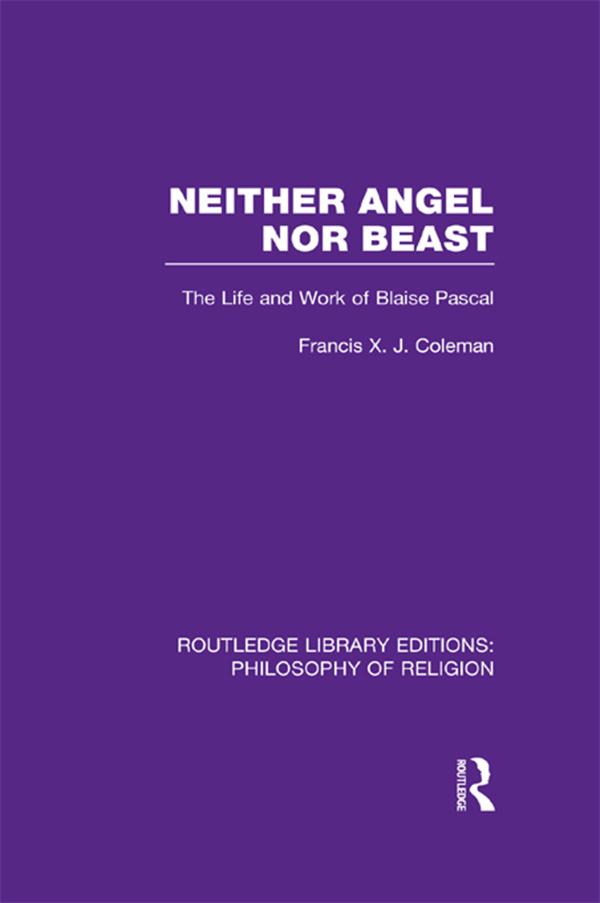
Blaise Pascal began as a mathematical prodigy, developed into a physicist and inventor, and had become by the end of his life in 1662 a profound religious thinker. As a philosopher, he was most convinced by the long tradition of scepticism, and so refused – like Kierkegaard – to build a philosophical or theological system. Instead, he argued that the human heart required other forms of discourse to come to terms with the basic existential questions – our nature, purpose and relationship with God.
This introduction to the life and philosophical thought of Pascal is intended for the general reader. Strikingly illustrated, it traces the antithetical tensions in Pascal’s life from his infancy, when he was said to have been placed under the spell of a sorceress, to his final years of extreme asceticism. Pascal stressed both the misery and greatness of humanity, our finitude and our comprehension of the infinite. The book shows how his life, philosophical thought and literary style can best be understood in the light of the paradoxical view of human nature. It covers the methods of argument and the central issues of the Provincial Letters and of the Pensées; the Introduction places Pascal’s thought in the religious and political climate of seventeenth-century France, and a ‘Chronology of the Life of Pascal’ is also included.
Paga facilmente con carta, Klarna, Apple Pay o Google Pay. Non sei soddisfatto? Hai sempre 14 giorni per il rimborso. Leggi di più nei nostri termini. Per qualsiasi domanda, scrivici a hello@memmo.org.
Memmo rende lo studio più facile, ovunque tu sia nel mondo. Qui trovi i tuoi libri di testo e strumenti di studio intelligenti, tutto in un unico posto: riassunti, quiz, podcast e flashcard. E poi c'è Ted, il tuo compagno di studio che risponde a ogni tua domanda. Oltre 50.000 studenti studiano già qui: è stato creato per aiutarti a imparare più velocemente e a stressarti meno.