
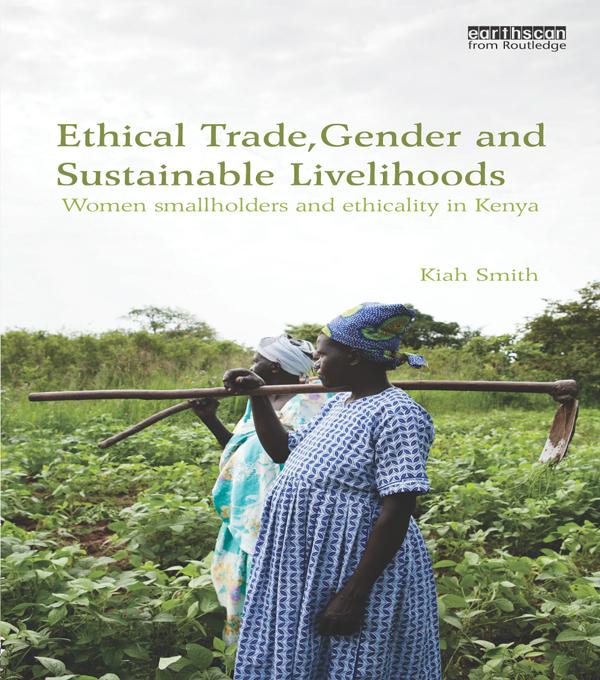
Fair and ethical trade is often criticized for being highly gendered, and for institutionalizing the ethical values of consumers, the priorities of NGOs and governments, and most of all, food retailers. But little is known about how women smallholder farmers experience diverse ethical standards, or whether and how standards reflect their values, local cultural and environmental contexts, or priorities for achieving sustainable livelihoods.
Linking gender, smallholder livelihoods and global ethical trade regulations, this book reveals that multiple understandings of social justice, environmental sustainability and well-being – or ethicality – exist in parallel to those institutionalized in ethical trade schemes. Through an in-depth case study of smallholder subsistence and French bean farming in Kenya, the book grounds the analysis of livelihoods, gender and ethical trade in women smallholders’ perspectives, links the macro level of markets with the micro level of livelihoods, and engenders relations of power, structure and agency in food networks.
It brings together disparate bodies of theory to illustrate the knowledge, strategies and values of women smallholder farmers that are often beyond the scope of ethical trade regulations. It also provides a challenging new vision for doing food systems research.
Paga facilmente con carta, Klarna, Apple Pay o Google Pay. Non sei soddisfatto? Hai sempre 14 giorni per il rimborso. Leggi di più nei nostri termini. Per qualsiasi domanda, scrivici a hello@memmo.org.
Memmo rende lo studio più facile, ovunque tu sia nel mondo. Qui trovi i tuoi libri di testo e strumenti di studio intelligenti, tutto in un unico posto: riassunti, quiz, podcast e flashcard. E poi c'è Ted, il tuo compagno di studio che risponde a ogni tua domanda. Oltre 50.000 studenti studiano già qui: è stato creato per aiutarti a imparare più velocemente e a stressarti meno.