
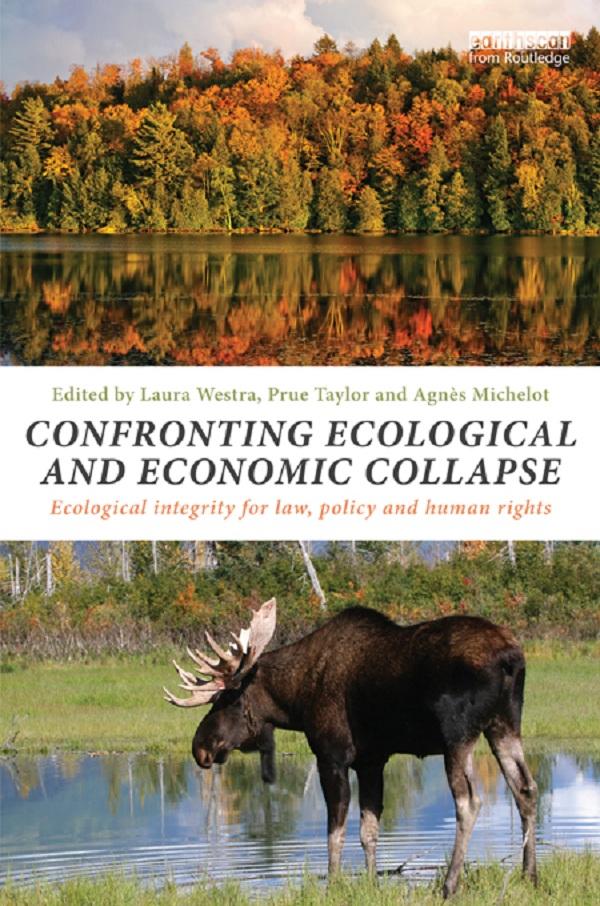
From the first appearance of the term in law in the Clean Water Act of 1972 (US), ecological integrity has been debated by a wide range of researchers, including biologists, ecologists, philosophers, legal scholars, doctors and epidemiologists, whose joint interest was the study and understanding of ecological/biological integrity from various standpoints and disciplines. This volume discusses the need for ecological integrity as a major guiding principle in a variety of policy areas, to counter the present ecological and economic crises with their multiple effects on human rights.
The book celebrates the 20th anniversary of the Global Ecological Integrity Group and reassesses the basic concept of ecological integrity in order to show how a future beyond catastrophe and disaster is in fact possible, but only if civil society and ultimately legal regimes acknowledge the necessity to consider ecointegrity as a primary factor in decision-making. This is key to the support of basic rights to clean air and water, for halting climate change, and also the basic rights of women and indigenous people. As the authors clearly show, all these rights ultimately depend upon accepting policies that acknowledge the pivotal role of ecological integrity.
Paga facilmente con carta, Klarna, Apple Pay o Google Pay. Non sei soddisfatto? Hai sempre 14 giorni per il rimborso. Leggi di più nei nostri termini. Per qualsiasi domanda, scrivici a hello@memmo.org.
Memmo rende lo studio più facile, ovunque tu sia nel mondo. Qui trovi i tuoi libri di testo e strumenti di studio intelligenti, tutto in un unico posto: riassunti, quiz, podcast e flashcard. E poi c'è Ted, il tuo compagno di studio che risponde a ogni tua domanda. Oltre 50.000 studenti studiano già qui: è stato creato per aiutarti a imparare più velocemente e a stressarti meno.