
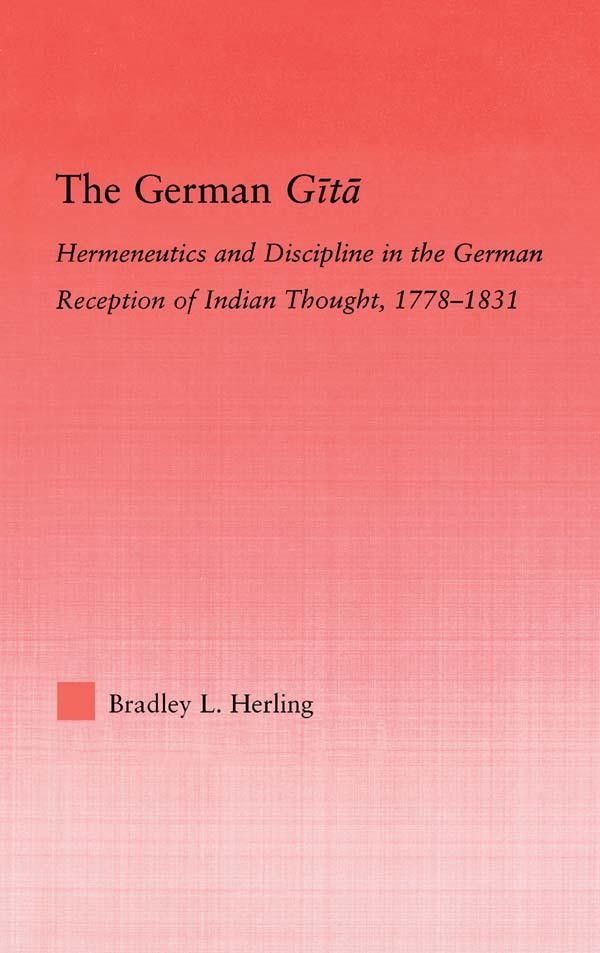
How did the Bhagavadgãtà first become an object of German philosophical and philological inquiry? How were its foundational concepts initially interpreted within German intellectual circles, and what does this episode in the history of cross-cultural encounter teach us about the status of comparative philosophy today? This book addresses these questions through a careful study of the figures who read, translated and interpreted the Bhagavadgãtà around the turn of the nineteenth century in Germany: J.G. Herder, F. Majer, F. Schlegel, A.W. Schlegel, W. von Humboldt, and G.W.F. Hegel. Methodologically, the study attends to the intellectual contexts and prejudices that framed the early reception of the text. But it also delves deeper by investigating the way these frameworks inflected the construction of the Bhagavadgãtà and its foundational concepts through the scholarly acts of excerpting, anthologization, and translation. Overall, the project contributes to the pluralization of Western philosophy and its history while simultaneously arguing for a continued critical alertness in cross-cultural comparison of philosophical and religious worldviews.
Paga facilmente con carta, Klarna, Apple Pay o Google Pay. Non sei soddisfatto? Hai sempre 14 giorni per il rimborso. Leggi di più nei nostri termini. Per qualsiasi domanda, scrivici a hello@memmo.org.
Memmo rende lo studio più facile, ovunque tu sia nel mondo. Qui trovi i tuoi libri di testo e strumenti di studio intelligenti, tutto in un unico posto: riassunti, quiz, podcast e flashcard. E poi c'è Ted, il tuo compagno di studio che risponde a ogni tua domanda. Oltre 50.000 studenti studiano già qui: è stato creato per aiutarti a imparare più velocemente e a stressarti meno.