
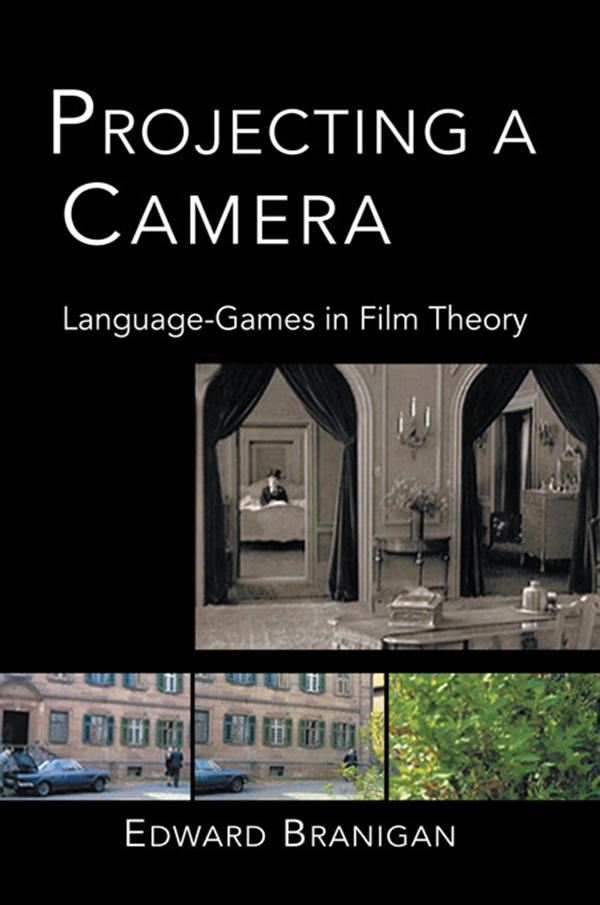
In Projecting a Camera, film theorist Edward Branigan offers a groundbreaking approach to understanding film theory. Why, for example, does a camera move? What does a camera "know"? (And when does it know it?) What is the camera's relation to the subject during long static shots? What happens when the screen is blank? Through a wide-ranging engagement with Wittgenstein and theorists of film, he offers one of the most fully developed understandings of the ways in which the camera operates in film.
With its thorough grounding in the philosophy of spectatorship and narrative, Projecting aCamera takes the study of film to a new level. With the care and precision that he brought to NarrativeComprehension and Film, Edward Branigan maps the ways in which we must understand the role of the camera, the meaning of the frame, the role of the spectator, and other key components of film-viewing. By analyzing how we think, discuss, and marvel about the films we see, Projecting a Camera, offers insights rich in implications for our understanding of film and film studies.
Paga facilmente con carta, Klarna, Apple Pay o Google Pay. Non sei soddisfatto? Hai sempre 14 giorni per il rimborso. Leggi di più nei nostri termini. Per qualsiasi domanda, scrivici a hello@memmo.org.
Memmo rende lo studio più facile, ovunque tu sia nel mondo. Qui trovi i tuoi libri di testo e strumenti di studio intelligenti, tutto in un unico posto: riassunti, quiz, podcast e flashcard. E poi c'è Ted, il tuo compagno di studio che risponde a ogni tua domanda. Oltre 50.000 studenti studiano già qui: è stato creato per aiutarti a imparare più velocemente e a stressarti meno.