
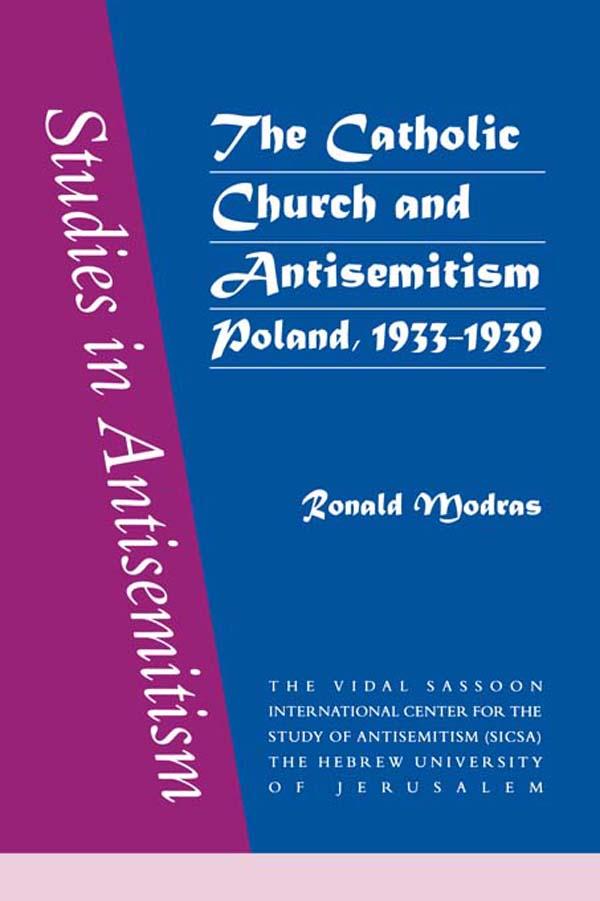
Interwar Poland was home to more Jews than any other country in Europe. Its commonplace but simplistic identification with antisemitism was due largely to nationalist efforts to boycott Jewish business. That they failed was not for want of support by the Catholic clergy, for whom the ''Jewish question'' was more than economic. The myth of a Masonic-Jewish alliance to subvert Christian culture first flourished in France but held considerable sway over Catholics in 1930s Poland as elsewhere. This book examines how, following Vatican policy, Polish church leaders resisted separation of church and state in the name of Catholic culture. In that struggle, every assimilated Jew served as both a symbol and a potential agent of security. Antisemitism is no longer regarded as a legitimate political stance. But in Europe, the United States, and the Middle East, the issues of religious culture, national identity, and minorities are with us still. This study of interwar Poland will shed light on dilemmas that still effect us today.
Paga facilmente con carta, Klarna, Apple Pay o Google Pay. Non sei soddisfatto? Hai sempre 14 giorni per il rimborso. Leggi di più nei nostri termini. Per qualsiasi domanda, scrivici a hello@memmo.org.
Memmo rende lo studio più facile, ovunque tu sia nel mondo. Qui trovi i tuoi libri di testo e strumenti di studio intelligenti, tutto in un unico posto: riassunti, quiz, podcast e flashcard. E poi c'è Ted, il tuo compagno di studio che risponde a ogni tua domanda. Oltre 50.000 studenti studiano già qui: è stato creato per aiutarti a imparare più velocemente e a stressarti meno.
Potrebbe interessarti anche
Acquista il libro0