
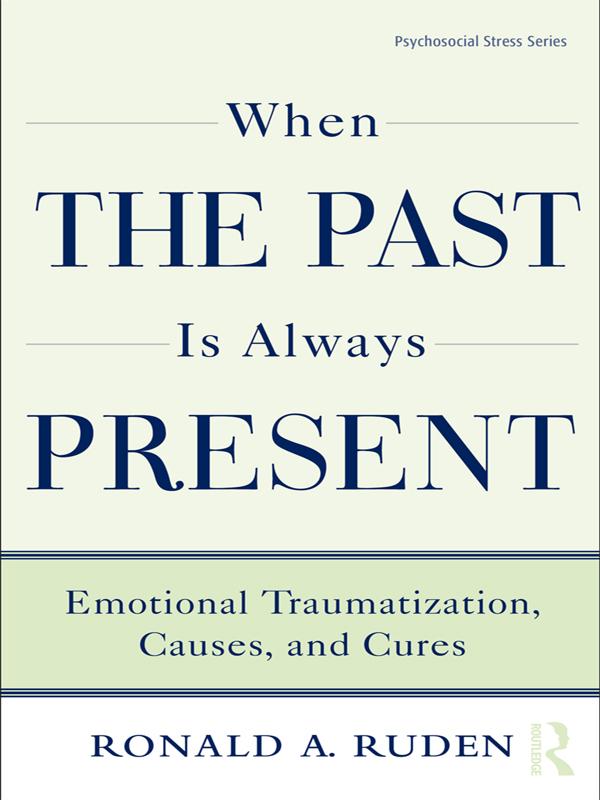
When the Past Is Always Present: Emotional Traumatization, Causes, and Cures introduces several new ideas about trauma and trauma treatment. The first of these is that another way to treat disorders arising from the mind/brain may be to use the senses. This idea, which is at the core of psychosensory therapy, forms what the author considers the "third pillar" of trauma treatment (the first and second pillars being psychotherapy and psychopharmacology). Psychosensory therapy postulates that sensory input—for example, touch—creates extrasensory activity that alters brain function and the way we respond to stimuli.
The second idea presented in this book is that traumatization is encoded in the amygdala only under special circumstances. Thus, by understanding what makes an individual resistant to traumatization we can offer a way of preventing it.
The third idea is that traumatization occurs because we cannot find a haven during the event. This is the cornerstone of havening, the particular form of psychosensory therapy described in the book. Using evolutionary biological principles and recently published neuroscientific studies, this book outlines in detail how havening touch de-links the emotional experience from a trauma, essentially making it just an ordinary memory. Once done, the event no longer causes distress.
Paga facilmente con carta, Klarna, Apple Pay o Google Pay. Non sei soddisfatto? Hai sempre 14 giorni per il rimborso. Leggi di più nei nostri termini. Per qualsiasi domanda, scrivici a hello@memmo.org.
Memmo rende lo studio più facile, ovunque tu sia nel mondo. Qui trovi i tuoi libri di testo e strumenti di studio intelligenti, tutto in un unico posto: riassunti, quiz, podcast e flashcard. E poi c'è Ted, il tuo compagno di studio che risponde a ogni tua domanda. Oltre 50.000 studenti studiano già qui: è stato creato per aiutarti a imparare più velocemente e a stressarti meno.