
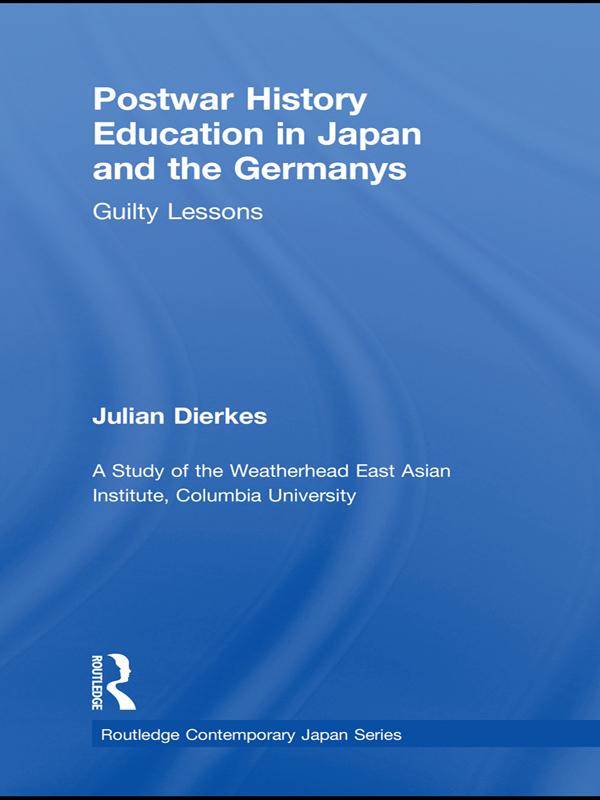
How did East and West Germany and Japan reconstitute national identity after World War II? Did all three experience parallel reactions to national trauma and reconstruction?
History education shaped how these nations reconceived their national identities. Because the content of history education was controlled by different actors, history education materials framed national identity in very different ways. In Japan, where the curriculum was controlled by bureaucrats bent on maintaining their purported neutrality, materials focused on the empirical building blocks of history (who? where? what?) at the expense of discussions of historical responsibility. In East Germany, where party cadres controlled the curriculum, students were taught that World War II was a capitalist aberration. In (West) Germany, where teachers controlled the curriculum, students were taught the lessons of shame and then regeneration after historians turned away from grand national narratives.
This book shows that constructions of national identity are not easily malleable on the basis of moral and political concerns only, but that they are subject to institutional constraints and opportunities. In an age when post-conflict reconstruction and reconciliation has become a major focus of international policies, the analysis offers important implications for the parallel revision of portrayals of national history and the institutional reconstruction of policy-making regimes.
Paga facilmente con carta, Klarna, Apple Pay o Google Pay. Non sei soddisfatto? Hai sempre 14 giorni per il rimborso. Leggi di più nei nostri termini. Per qualsiasi domanda, scrivici a hello@memmo.org.
Memmo rende lo studio più facile, ovunque tu sia nel mondo. Qui trovi i tuoi libri di testo e strumenti di studio intelligenti, tutto in un unico posto: riassunti, quiz, podcast e flashcard. E poi c'è Ted, il tuo compagno di studio che risponde a ogni tua domanda. Oltre 50.000 studenti studiano già qui: è stato creato per aiutarti a imparare più velocemente e a stressarti meno.