
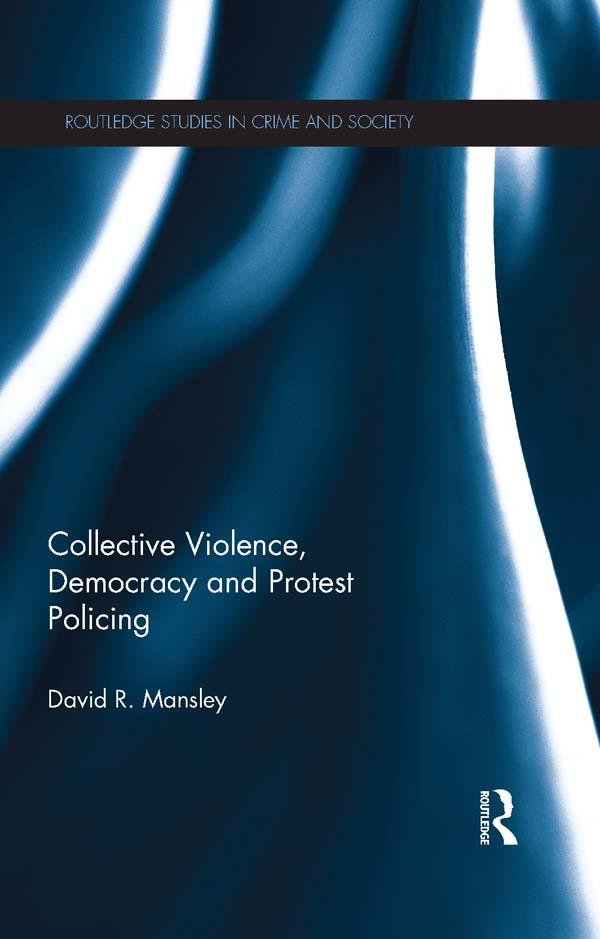
In this book David Mansley argues that the frequency with which violence intrudes on to the streets is related to both how society is governed and how it is policed. With the help of an innovative methodology, he quantifies and tests three variables – collective violence, democracy and protest policing – using protests in Great Britain in 1999–2011, for his sampling frame. The result is the design of new tools of measurement and a harvest of new data, including previously unpublished details of banning orders and riot damages, that enable us to reflect, with the benefit of broad sociological perspective, on the causes of contemporary violent events.
Mansley’s explanation of the trends he identifies draws from the work of the best thinkers on violence – especially Charles Tilly, Thomas Hobbes and Norbert Elias. He shows how the style of protest policing and the depth of democracy, both of which function under the direction of the political economy, are crucial to the state’s credentials as the monopoly supplier of legitimate violence. His discussion touches on such current topics as the institution of police commissioners, the privatisation of policing duties, and the decline in homicide.
This cultured study, which includes an engaging review of the existing scholarship on violence, is essential material for undergraduate and postgraduate students reading criminology, sociology or political theory.
Paga facilmente con carta, Klarna, Apple Pay o Google Pay. Non sei soddisfatto? Hai sempre 14 giorni per il rimborso. Leggi di più nei nostri termini. Per qualsiasi domanda, scrivici a hello@memmo.org.
Memmo rende lo studio più facile, ovunque tu sia nel mondo. Qui trovi i tuoi libri di testo e strumenti di studio intelligenti, tutto in un unico posto: riassunti, quiz, podcast e flashcard. E poi c'è Ted, il tuo compagno di studio che risponde a ogni tua domanda. Oltre 50.000 studenti studiano già qui: è stato creato per aiutarti a imparare più velocemente e a stressarti meno.