
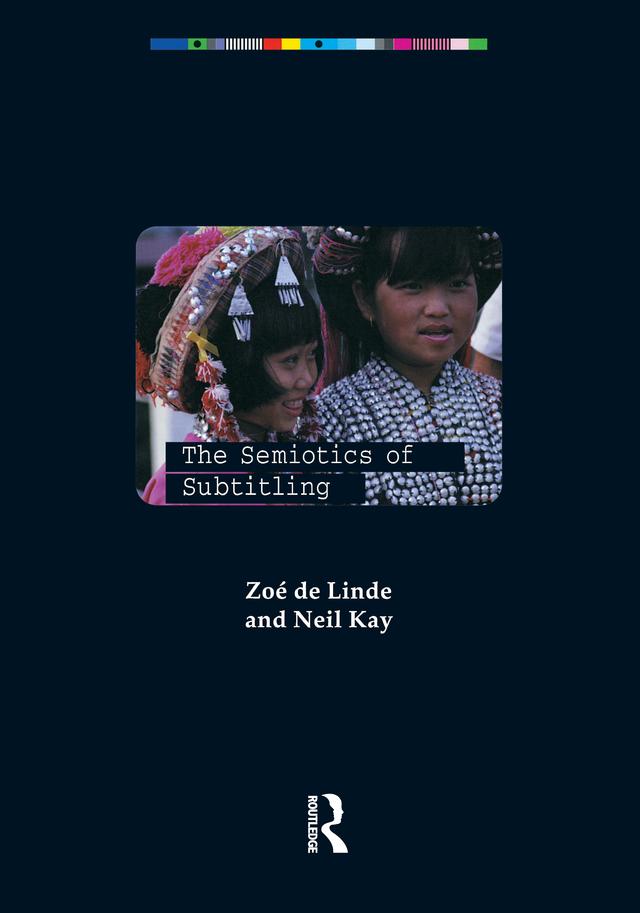
Subtitling serves two purposes: to translate the dialogue of foreign language films for secondary audiences (interlingual) and to transform the soundtrack of television programmes into written captions for deaf and hard-of-hearing viewers (intralingual). While both practices have strong linguistic roots, often being compared to text translation and editing, this book reveals the complex influences arising from the audiovisual environment. Far from being simply a matter of linguistic equivalence, the authors show how the effectiveness of subtitles is crucially dependent upon the hidden semiotic relations between text and image; relations which affect the meaning of the visual-linguistic message and the way in which that message is ultimately received.
Focusing primarily on intralingual subtitling, The Semiotics of Subtitling adopts a holistic approach, combining linguistic theory with empirical eye-movement analysis in order to explore the full depth of the medium and the reading behaviour of viewers.
Paga facilmente con carta, Klarna, Apple Pay o Google Pay. Non sei soddisfatto? Hai sempre 14 giorni per il rimborso. Leggi di più nei nostri termini. Per qualsiasi domanda, scrivici a hello@memmo.org.
Memmo rende lo studio più facile, ovunque tu sia nel mondo. Qui trovi i tuoi libri di testo e strumenti di studio intelligenti, tutto in un unico posto: riassunti, quiz, podcast e flashcard. E poi c'è Ted, il tuo compagno di studio che risponde a ogni tua domanda. Oltre 50.000 studenti studiano già qui: è stato creato per aiutarti a imparare più velocemente e a stressarti meno.