
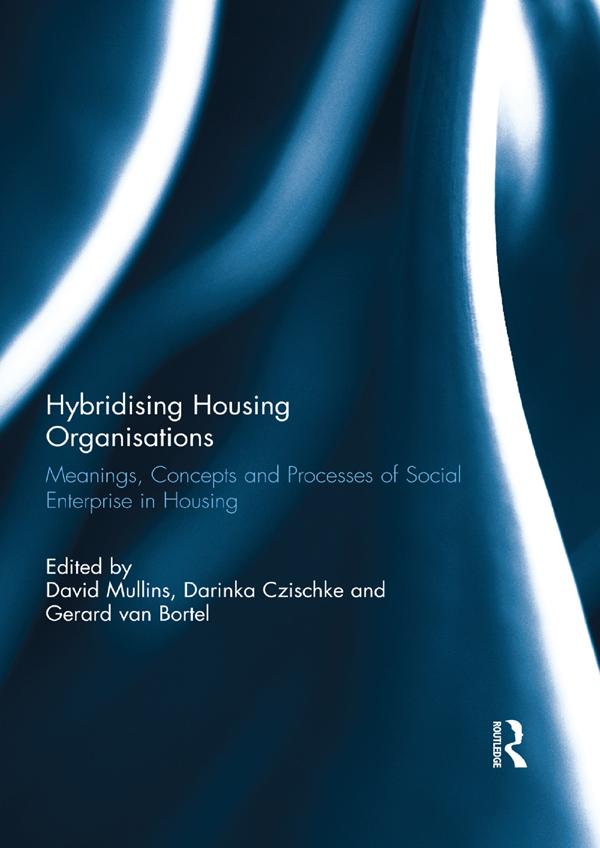
Social housing has long been delivered through mixed economy mechanisms, but there has been little focus in housing studies on what this means for housing organisations themselves. This book presents recent international research applying concepts of social enterprise and hybridity to illuminate organisational behaviour in the housing sector. It addresses critiques of the explanatory value of these concepts by exploring their underlying meanings and their application to diverse case studies worldwide. The concepts are found to be most useful where they inform dynamic analysis of hybridisation and identify underlying change mechanisms, rather than simply providing static descriptions of hybridity. Various chapters in the book show how analysis can be enriched by drawing on institutional theory to develop concepts such as competing organisational logics, trade-offs between social and commercial goals and resource transfers. The Book also looks at policy as a driver for hybridisation and to the regulatory challenges for policy systems that have come to rely on hybrid forms of delivery. A research agenda is proposed building on these conceptual frameworks to develop systematic approaches to data collection and analysis to enable clearer and more consistent meanings to emerge.
This book was published as a special issue of Housing Studies.
Paga facilmente con carta, Klarna, Apple Pay o Google Pay. Non sei soddisfatto? Hai sempre 14 giorni per il rimborso. Leggi di più nei nostri termini. Per qualsiasi domanda, scrivici a hello@memmo.org.
Memmo rende lo studio più facile, ovunque tu sia nel mondo. Qui trovi i tuoi libri di testo e strumenti di studio intelligenti, tutto in un unico posto: riassunti, quiz, podcast e flashcard. E poi c'è Ted, il tuo compagno di studio che risponde a ogni tua domanda. Oltre 50.000 studenti studiano già qui: è stato creato per aiutarti a imparare più velocemente e a stressarti meno.