
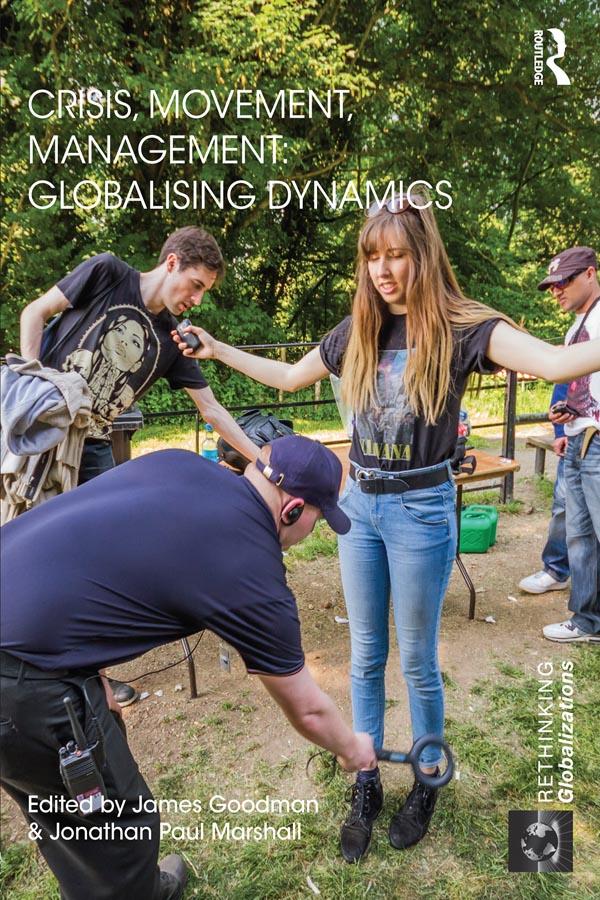
Globalised neo-liberalism has produced multiple crises – social, ecological, political. In the past, crises of global order have generated large-scale social transformations, and the current crises likewise hold a transformative promise. Social movements become a crucial barometer, in signalling both the demise and rise of political formations and programs. Elite strategies, framed as crisis management, create their own disordering side-effects. Experiments in movement strategy gain greater significance, as do contending elite efforts at repressing, managing or displacing the fall-out. In this book we investigate both movements and management in the face of crisis, taking crisis and unanticipated consequences as a normal state-of-play. The book enquires into the winners and losers from crisis, and investigates the movement-management nexus as it unfolds in particular localities as well as in broader contexts.
The book deals with some of the most pressing conflicts of our time, and produces a range of theoretical insights: the ubiquity of crisis is seen as not only a hallmark of social life, but a way into a different kind of social analysis.
This book was published as a special issue of Globalizations.
Paga facilmente con carta, Klarna, Apple Pay o Google Pay. Non sei soddisfatto? Hai sempre 14 giorni per il rimborso. Leggi di più nei nostri termini. Per qualsiasi domanda, scrivici a hello@memmo.org.
Memmo rende lo studio più facile, ovunque tu sia nel mondo. Qui trovi i tuoi libri di testo e strumenti di studio intelligenti, tutto in un unico posto: riassunti, quiz, podcast e flashcard. E poi c'è Ted, il tuo compagno di studio che risponde a ogni tua domanda. Oltre 50.000 studenti studiano già qui: è stato creato per aiutarti a imparare più velocemente e a stressarti meno.