
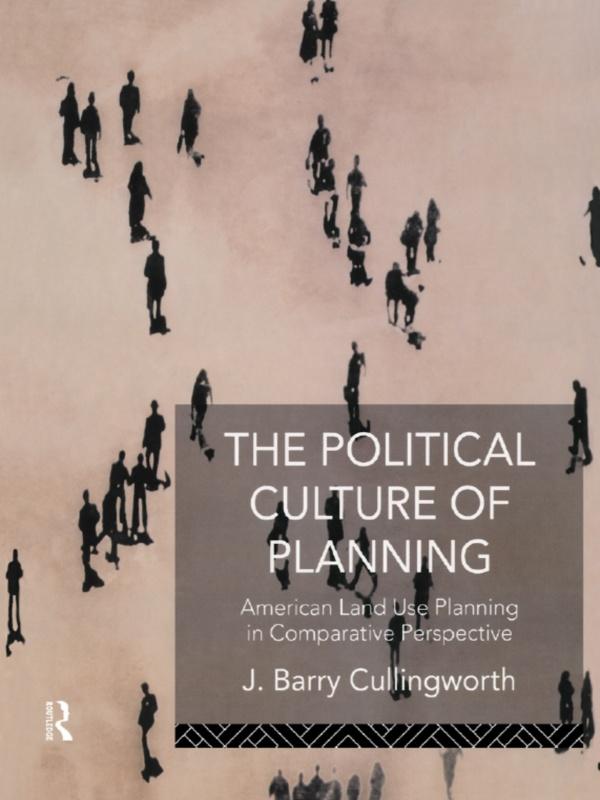
The Political Culture of Planning is written for two quite distinct readerships. The main body of the book synthesizes a mass of information to provide an overview of a complex and amorphous field. This material is designed to meet the needs of students who require a succinct account of the American system of land use planning. These readers can ignore the notes. For those who are embarking upon a much wider and deeper study of land use planning in the US the notes are crucial: they provide the guideposts to an immensely rich literature. The first four parts of the text present the main issues of land use planning in the US. Part 1 assesses the US zoning system. The introductory chapter discusses the meaning of zoning (and its difference from planning), the primacy of local governments, the constitutional framework and the role of the courts. Chapter two provides the historical background to zoning and an outline of the classic Euclid case. Chapter three discusses the objectives and nature of zoning and the use which local governments have made of its inherently inflexible character. Chapter four acts as a corrective to this view, describing how lawyers and planners have shown remarkable ingenuity in adapting zoning to the demands of a changing society. Part 2 deals with the perennial issues of discrimination, financing infrastructure for new development and the process for negotiating zoning matters. Part 3 presents a discussion of two overlapping issues of increasing significance - aesthetics and historic preservation. Part 4 focusses on the main issue facing land use planners: attempting to channel the forces of development into spatial forms held to be socially desirable. Part 5 consists of a series of broad-ranging essays which discuss land use planning in the US, its institutional and cultural framework and the reasons for its particular character. Part 6 discusses the limited possibilities for land use reform in the US - drawing on the author's considerable experience in both Britain and Canada - in order to interpret the limitations and potentialities of land use planning in the US.
Pagine: 368
Categoria: Arkitektur & Stadsplanering
e-ISBN: 9781134881192
Peso di spedizione: 1.2 kg
Spedito in: 1-2 giorni
Paga facilmente con carta, Klarna, Apple Pay o Google Pay. Non sei soddisfatto? Hai sempre 14 giorni per il rimborso. Leggi di più nei nostri termini. Per qualsiasi domanda, scrivici a hello@memmo.org.
Memmo rende lo studio più facile, ovunque tu sia nel mondo. Qui trovi i tuoi libri di testo e strumenti di studio intelligenti, tutto in un unico posto: riassunti, quiz, podcast e flashcard. E poi c'è Ted, il tuo compagno di studio che risponde a ogni tua domanda. Oltre 50.000 studenti studiano già qui: è stato creato per aiutarti a imparare più velocemente e a stressarti meno.
Potrebbe interessarti anche
Acquista il libro0