
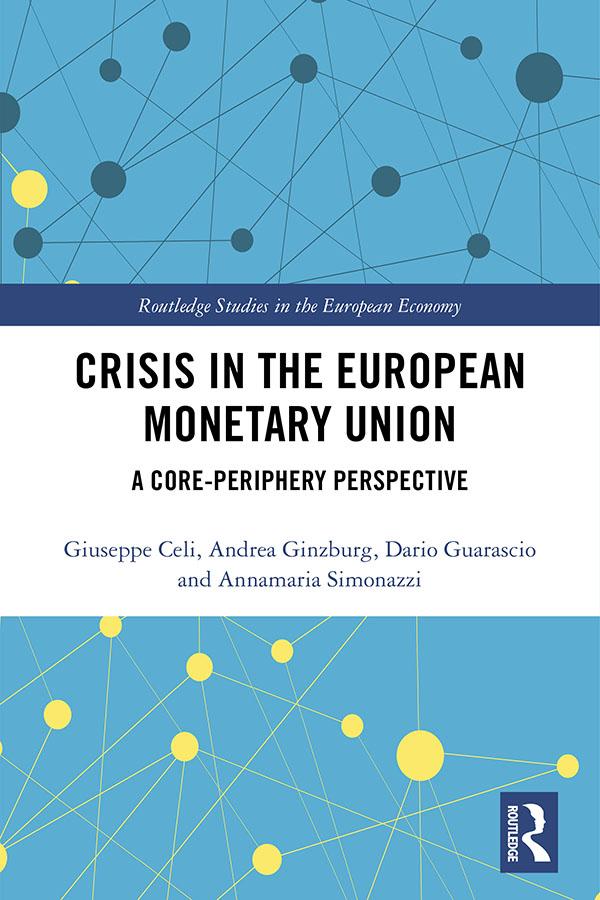
After decades of economic integration and EU enlargement, the economic geography of Europe has shifted, with new peripheries emerging and the core showing signs of fragmentation. This book examines the paths of the core and peripheral countries, with a focus on their diverse productive capabilities and their interdependence.
Crisis in the European Monetary Union: A Core-Periphery Perspective provides a new framework for analysing the economic crisis that has shaken the Eurozone countries. Its analysis goes beyond the short-term, to study the medium and long-term relations between ‘core’ countries (particularly Germany) and Southern European ‘peripheral’ countries. The authors argue that long-term sustainability means assigning the state a key role in guiding investment, which in turn implies industrial policies geared towards diversifying, innovating and strengthening the economic structures of peripheral countries to help them thrive.
Offering a fresh angle on the European crisis, this volume will appeal to students, academics and policymakers interested in the past, present and future construction of Europe.
Paga facilmente con carta, Klarna, Apple Pay o Google Pay. Non sei soddisfatto? Hai sempre 14 giorni per il rimborso. Leggi di più nei nostri termini. Per qualsiasi domanda, scrivici a hello@memmo.org.
Memmo rende lo studio più facile, ovunque tu sia nel mondo. Qui trovi i tuoi libri di testo e strumenti di studio intelligenti, tutto in un unico posto: riassunti, quiz, podcast e flashcard. E poi c'è Ted, il tuo compagno di studio che risponde a ogni tua domanda. Oltre 50.000 studenti studiano già qui: è stato creato per aiutarti a imparare più velocemente e a stressarti meno.