
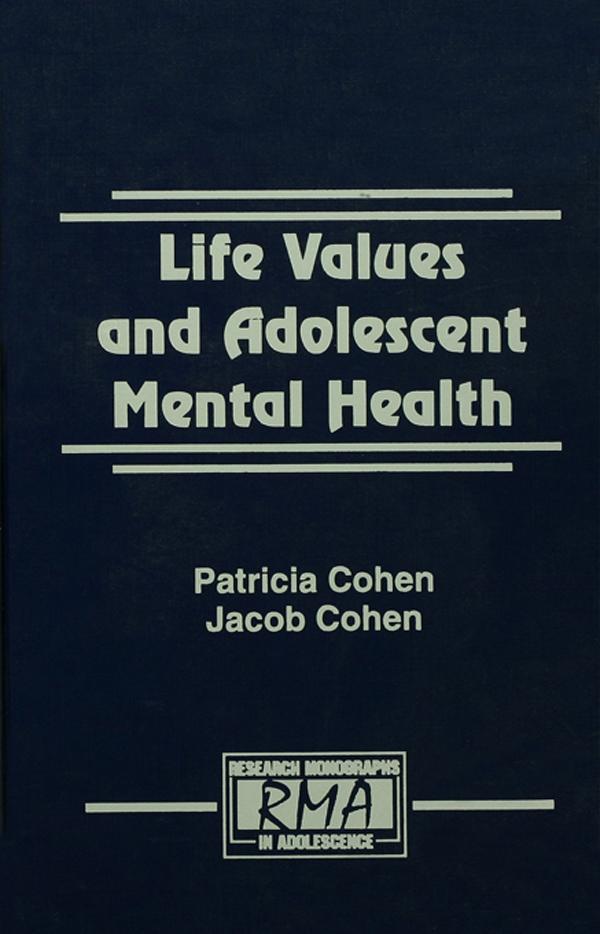
Arising from the Cohens' work on the epidemiology of childhood psychopathology, this book explores the two aspects of motivational structure--ideas and values--that underlie the development of maladaptive functioning and symptoms. The first aspect is a measure of what children admire in their peers; this measure is seen as an operationalization of personal ideals. The second is a measure of life goals, seen as a representation of the contemporary structure of long-term personal values.
Despite the considerable amount of attention given in the popular press and among social critics and politicians, values have been relatively neglected as a topic of empirical research in this country. To fill the void, this work uses data from a large cohort of young people who have been studied longitudinally since early childhood to elucidate three aspects of life goals and values:
* What are the demographic, family, peer, school, and intrapersonal influences that shape values and life goals of adolescents?
* How do they change over the course of adolescence?
* What impact do these values have on the lives of adolescents and young adults?
Decisions about what we find most admirable and which of the many apparently good things in life we will take on as our top priorities are consequential both for the contemporary and for the future emotional and behavioral well-being of the individual. Thus, this book explores systematically the environmental origins of ideals and values, using deprivation and attainment hypotheses to examine a variety of influences on the development of differences in values. This book also examines the relationship between the measures of children's values and psychopathology, examining both the "Axis 1" diagnosis, including disruptive behavior disorders, depression, and anxiety, and the "Axis 2" personality disorders.
Providing an extensive study of the life values of adolescents and the state of their mental health, this monograph will be of interest to developmental psychologists specializing in adolescence, child clinical psychologists, and psychiatrists.
Paga facilmente con carta, Klarna, Apple Pay o Google Pay. Non sei soddisfatto? Hai sempre 14 giorni per il rimborso. Leggi di più nei nostri termini. Per qualsiasi domanda, scrivici a hello@memmo.org.
Memmo rende lo studio più facile, ovunque tu sia nel mondo. Qui trovi i tuoi libri di testo e strumenti di studio intelligenti, tutto in un unico posto: riassunti, quiz, podcast e flashcard. E poi c'è Ted, il tuo compagno di studio che risponde a ogni tua domanda. Oltre 50.000 studenti studiano già qui: è stato creato per aiutarti a imparare più velocemente e a stressarti meno.