
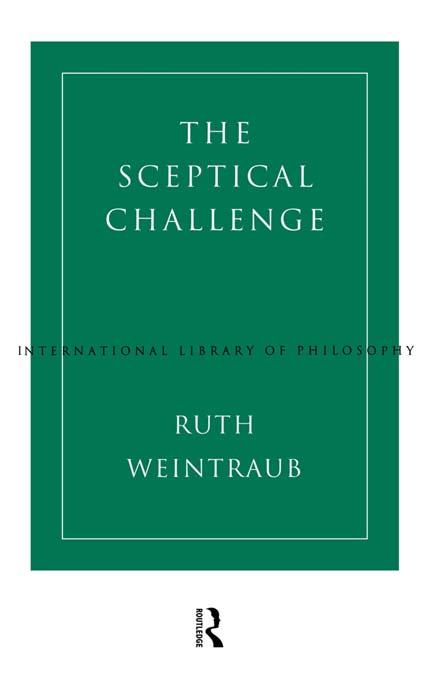
Do we really know the things we think we know? Are any of our beliefs reasonable? Scepticism gives a pessimistic reply to these important epistemological questions - we don't know anything; none of our beliefs are reasonable. But can such a seemingly paradoxical claim be more than an intellectual curiousity? And if it is, can it be refuted? Ruth Weintraub answers yes to both these questions.
The sceptical challenge is a formidable one, and should be confronted, not dismissed. The theoretical and practical difficulties it presents - in that the sceptical life cannot be lived, and the doctrine seems self-defeating - are in fact superficial, according to Ruth Weintraub. Her study looks at the sceptical arguments of Descartes, Hume and the ancient Greek sceptic, Sextus Empiricus. The author argues that by drawing on philosophy, rather than science, the sceptical challenge can be answered.
The Sceptical Challenge is a bold and original response to scepticism; it represents a new way of looking at the field for philosophers of epistemology.
Paga facilmente con carta, Klarna, Apple Pay o Google Pay. Non sei soddisfatto? Hai sempre 14 giorni per il rimborso. Leggi di più nei nostri termini. Per qualsiasi domanda, scrivici a hello@memmo.org.
Memmo rende lo studio più facile, ovunque tu sia nel mondo. Qui trovi i tuoi libri di testo e strumenti di studio intelligenti, tutto in un unico posto: riassunti, quiz, podcast e flashcard. E poi c'è Ted, il tuo compagno di studio che risponde a ogni tua domanda. Oltre 50.000 studenti studiano già qui: è stato creato per aiutarti a imparare più velocemente e a stressarti meno.