
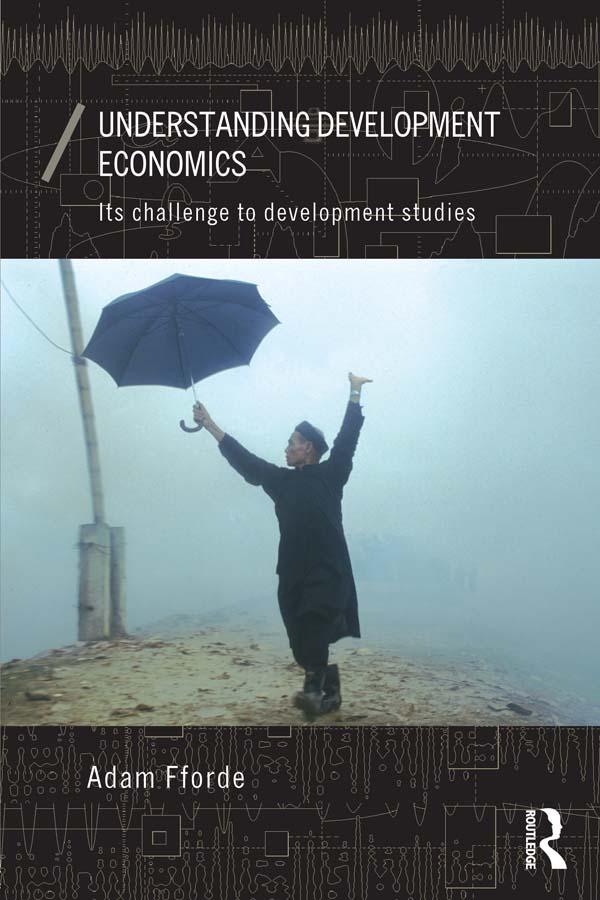
Important parts of development practice, especially in key institutions such as the World Bank, are dominated by economists. In contrast, Development Studies is largely based upon multidisciplinary work in which anthropologists, human geographers, sociologists, and others play important roles. Hence, a tension has arisen between the claims made by Development Economics to be a scientific, measurable discipline prone to wide usage of mathematical modelling, and the more discursive, practice based approach favoured by Development Studies.
The aim of this book is to show how the two disciplines have interacted, as well as how they differ. This is crucial in forming an understanding of development work, and to thinking about why policy recommendations can often lead to severe and continuing problems in developing countries.
This book introduces Development Economics to those coming from two different but linked perspectives; economists and students of development who are not economists. In both explaining and critiquing Development Economics, the book is able to suggest the implications of these findings for Development Studies, and more broadly, for development policy and its outcomes.
Paga facilmente con carta, Klarna, Apple Pay o Google Pay. Non sei soddisfatto? Hai sempre 14 giorni per il rimborso. Leggi di più nei nostri termini. Per qualsiasi domanda, scrivici a hello@memmo.org.
Memmo rende lo studio più facile, ovunque tu sia nel mondo. Qui trovi i tuoi libri di testo e strumenti di studio intelligenti, tutto in un unico posto: riassunti, quiz, podcast e flashcard. E poi c'è Ted, il tuo compagno di studio che risponde a ogni tua domanda. Oltre 50.000 studenti studiano già qui: è stato creato per aiutarti a imparare più velocemente e a stressarti meno.