
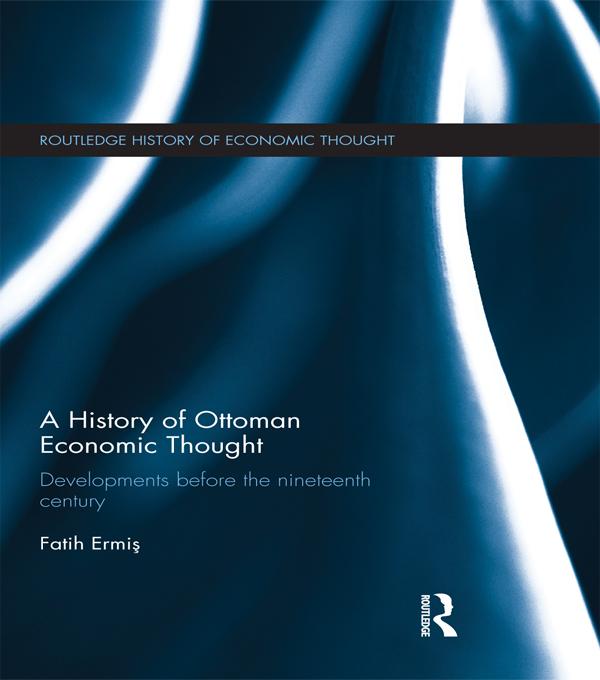
The Ottoman Empire (1299-1923) existed at the crossroads of the East and the West. Neither the history of Western Asia, nor that of Eastern Europe, can be fully understood without knowledge of the history of the Ottoman Empire.
The question is often raised of whether or not economic thinking can exist in a non-capitalistic society. In the Ottoman Empire, like in all other pre-capitalistic cultures, the economic sphere was an integral part of social life, and elements of Ottoman economic thought can frequently be found in amongst political, social and religious ideas. Ottoman economic thinking cannot, therefore, be analyzed in isolation; analysis of economic thinking can reveal aspects of the entire world view of the Ottomans.
Based on extensive archival work, this landmark volume examines Ottoman economic thinking in the classical period using three concepts: humorism, circle of justice and household economy. Basing the research upon the writings of the Ottoman elite and bureaucrats, this book explores Ottoman economic thinking starting from its own dynamics, avoiding the temptation to seek modern economic theories and approaches in the Ottoman milieu.
Paga facilmente con carta, Klarna, Apple Pay o Google Pay. Non sei soddisfatto? Hai sempre 14 giorni per il rimborso. Leggi di più nei nostri termini. Per qualsiasi domanda, scrivici a hello@memmo.org.
Memmo rende lo studio più facile, ovunque tu sia nel mondo. Qui trovi i tuoi libri di testo e strumenti di studio intelligenti, tutto in un unico posto: riassunti, quiz, podcast e flashcard. E poi c'è Ted, il tuo compagno di studio che risponde a ogni tua domanda. Oltre 50.000 studenti studiano già qui: è stato creato per aiutarti a imparare più velocemente e a stressarti meno.