
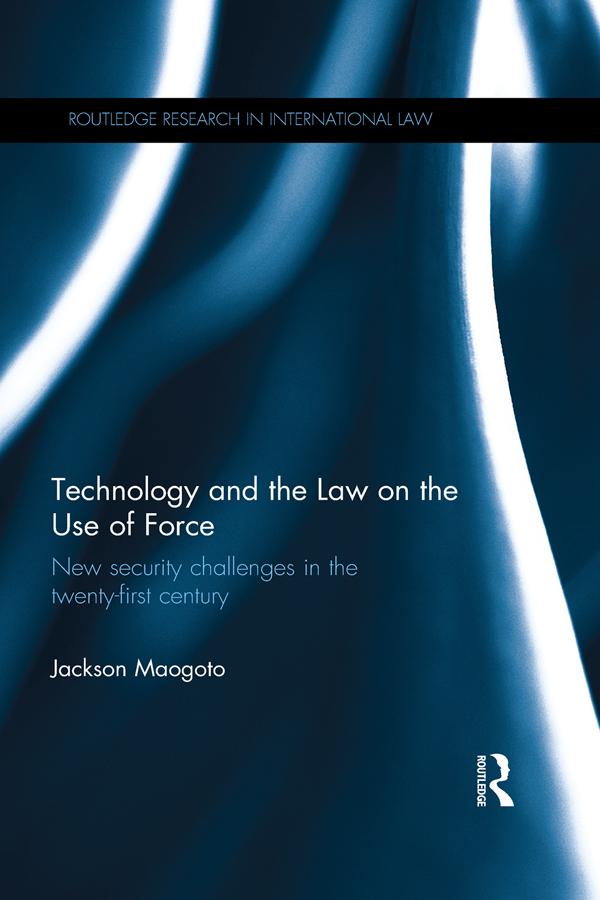
As governmental and non-governmental operations become progressively supported by vast automated systems and electronic data flows, attacks of government information infrastructure, operations and processes pose a serious threat to economic and military interests. In 2007 Estonia suffered a month long cyber assault to its digital infrastructure, described in cyberspace as ‘Web War I’. In 2010, a worm—Stuxnet—was identified as supervisory control and data acquisition systems at Iran’s uranium enrichment plant, presumably in an attempt to set back Iran’s nuclear programme. The dependence upon telecommunications and information infrastructures puts at risk Critical National Infrastructure, and is now at the core of national security interests.
This book takes a detailed look at these new theatres of war and considers their relation to international law on the use of force. Except in cases of self-defence or with the authorisation of a Security Council Resolution, the use of force is prohibited under the UN charter and customary international law. However, the law of jus ad bellum was developed in a pre-digital era where current technological capabilities could not be conceived. Jackson Maogoto asks whether the law on the use of force is able to deal with legal disputes likely to arise from modern warfare. Key queries include how one defines an armed attack in an age of anti-satellite weaponry, whether the destruction of a State’s vital digital eco-system or the "blinding" of military communication satellites constitutes a threat, and how one delimits the threshold that would enliven the right of self-defence or retaliatory action. The book argues that while technology has leapt ahead, the legal framework has failed to adapt, rendering States unable to legally defend themselves effectively.
The book will be of great interest and use to researchers and students of international law, the law of armed conflict, Information Technology and the law, and counter-terrorism.
Paga facilmente con carta, Klarna, Apple Pay o Google Pay. Non sei soddisfatto? Hai sempre 14 giorni per il rimborso. Leggi di più nei nostri termini. Per qualsiasi domanda, scrivici a hello@memmo.org.
Memmo rende lo studio più facile, ovunque tu sia nel mondo. Qui trovi i tuoi libri di testo e strumenti di studio intelligenti, tutto in un unico posto: riassunti, quiz, podcast e flashcard. E poi c'è Ted, il tuo compagno di studio che risponde a ogni tua domanda. Oltre 50.000 studenti studiano già qui: è stato creato per aiutarti a imparare più velocemente e a stressarti meno.