
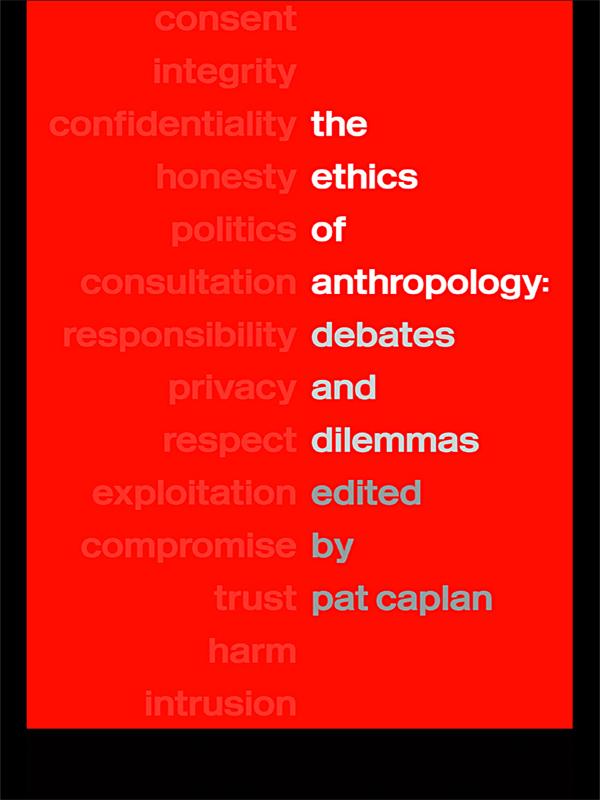
Since the inception of their discipline, anthropologists have studied virtually every conceivable aspect of other peoples' morality - religion, social control, sin, virtue, evil, duty, purity and pollution. But what of the examination of anthropology itself, and of its agendas, epistemes, theories and praxes? In 1991, Raymond Firth spoke of social anthropology as an essentially moral discipline. Is such a view outmoded in a postmodern era? Do anthropological ethics have to be re-thought each generation as the conditions of the discipline change, and as choices collide with moral alternatives? The Ethics of Anthropology looks at some of these crucial issues as they reflect on researcher relations, privacy, authority, secrecy and ownership of knowledge. The book combines theoretical papers and case studies from eminent scholars including Lisette Josephides, Steven Nugent, Marilyn Silverman, Andrew Spiegel and Veronica Strang. Showing how the topic of ethics goes to the heart of anthropology, it raises the controversial question of why - and for whom - the anthropological discipline functions.
Paga facilmente con carta, Klarna, Apple Pay o Google Pay. Non sei soddisfatto? Hai sempre 14 giorni per il rimborso. Leggi di più nei nostri termini. Per qualsiasi domanda, scrivici a hello@memmo.org.
Memmo rende lo studio più facile, ovunque tu sia nel mondo. Qui trovi i tuoi libri di testo e strumenti di studio intelligenti, tutto in un unico posto: riassunti, quiz, podcast e flashcard. E poi c'è Ted, il tuo compagno di studio che risponde a ogni tua domanda. Oltre 50.000 studenti studiano già qui: è stato creato per aiutarti a imparare più velocemente e a stressarti meno.