
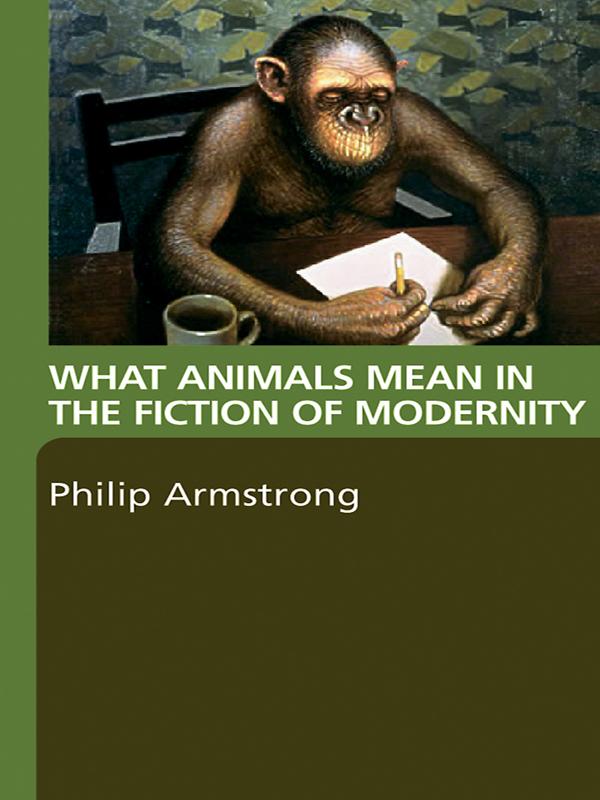
What Animals Mean in the Fiction of Modernity argues that nonhuman animals, and stories about them, have always been closely bound up with the conceptual and material work of modernity.
In the first half of the book, Philip Armstrong examines the function of animals and animal representations in four classic narratives: Robinson Crusoe, Gulliver’s Travels, Frankenstein and Moby-Dick. He then goes on to explore how these stories have been re-worked, in ways that reflect shifting social and environmental forces, by later novelists, including H.G. Wells, Upton Sinclair, D.H. Lawrence, Ernest Hemingway, Franz Kafka, Brigid Brophy, Bernard Malamud, Timothy Findley, Will Self, Margaret Atwood, Yann Martel and J.M. Coetzee.
What Animals Mean in the Fiction of Modernity also introduces readers to new developments in the study of human-animal relations. It does so by attending both to the significance of animals to humans, and to animals’ own purposes or designs; to what animals mean to us, and to what they mean to do, and how they mean to live.
Paga facilmente con carta, Klarna, Apple Pay o Google Pay. Non sei soddisfatto? Hai sempre 14 giorni per il rimborso. Leggi di più nei nostri termini. Per qualsiasi domanda, scrivici a hello@memmo.org.
Memmo rende lo studio più facile, ovunque tu sia nel mondo. Qui trovi i tuoi libri di testo e strumenti di studio intelligenti, tutto in un unico posto: riassunti, quiz, podcast e flashcard. E poi c'è Ted, il tuo compagno di studio che risponde a ogni tua domanda. Oltre 50.000 studenti studiano già qui: è stato creato per aiutarti a imparare più velocemente e a stressarti meno.