
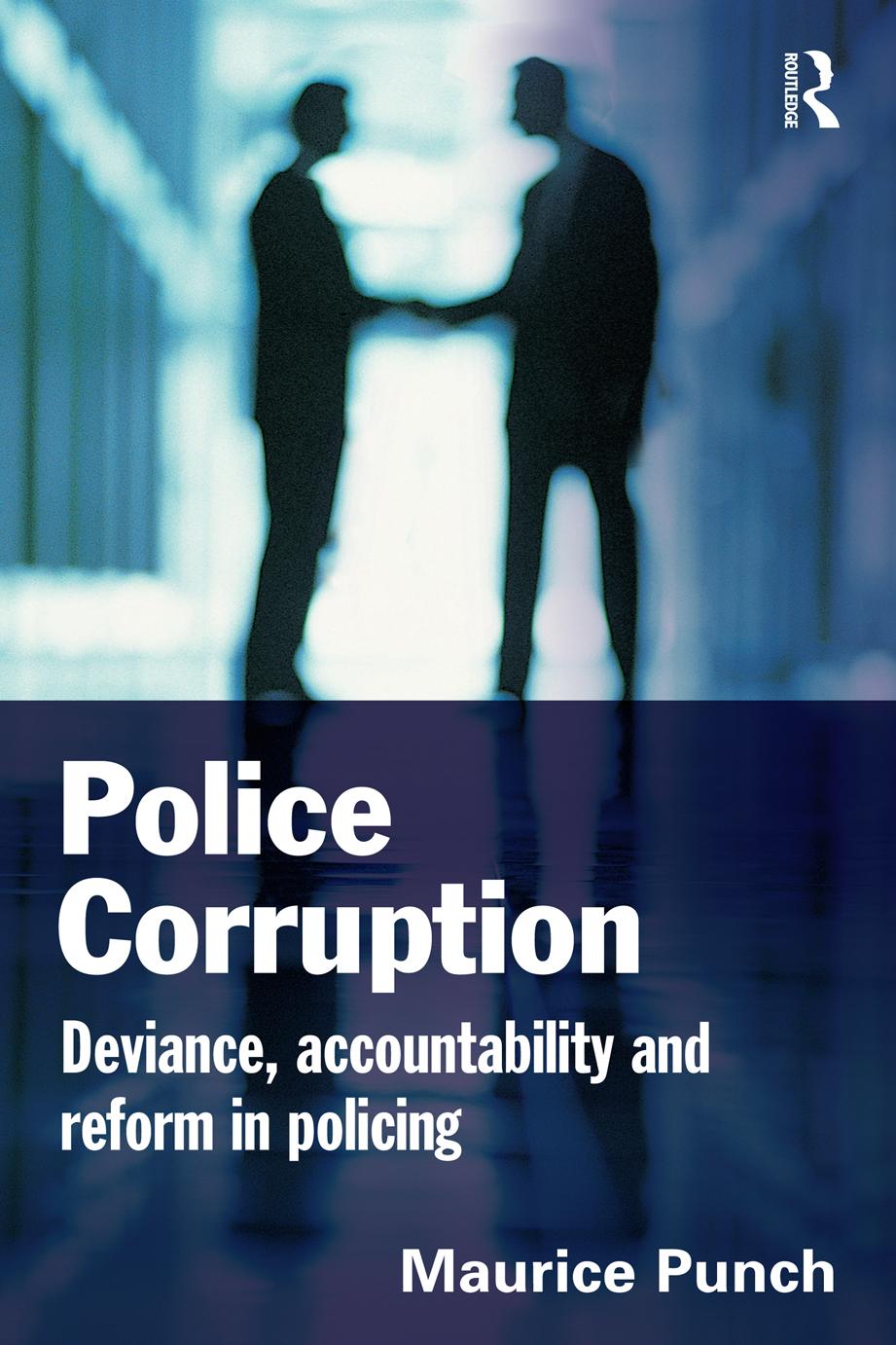
Policing and corruption are inseparable. This book argues that corruption is not one thing but covers many deviant and criminal practices in policing which also shift over time. It rejects the 'bad apple' metaphor and focuses on 'bad orchards', meaning not individual but institutional failure. For in policing the organisation, work and culture foster can encourage corruption. This raises issues as to why do police break the law and, crucially, 'who controls the controllers'?
Corruption is defined in a broad, multi-facetted way. It concerns abuse of authority and trust; and it takes serious form in conspiracies to break the law and to evade exposure when cops can become criminals. Attention is paid to typologies of corruption (with grass-eaters, meat-eaters, noble-cause); the forms corruption takes in diverse environments; the pathways officers take into corruption and their rationalisations; and to collusion in corruption from within and without the organization. Comparative analyses are made of corruption, scandal and reform principally in the USA, UK and the Netherlands.
The work examines issues of control, accountability and the new institutions of oversight. It provides a fresh, accessible overview of this under-researched topic for students, academics, police and criminal justice officials and members of oversight agencies.
Paga facilmente con carta, Klarna, Apple Pay o Google Pay. Non sei soddisfatto? Hai sempre 14 giorni per il rimborso. Leggi di più nei nostri termini. Per qualsiasi domanda, scrivici a hello@memmo.org.
Memmo rende lo studio più facile, ovunque tu sia nel mondo. Qui trovi i tuoi libri di testo e strumenti di studio intelligenti, tutto in un unico posto: riassunti, quiz, podcast e flashcard. E poi c'è Ted, il tuo compagno di studio che risponde a ogni tua domanda. Oltre 50.000 studenti studiano già qui: è stato creato per aiutarti a imparare più velocemente e a stressarti meno.