
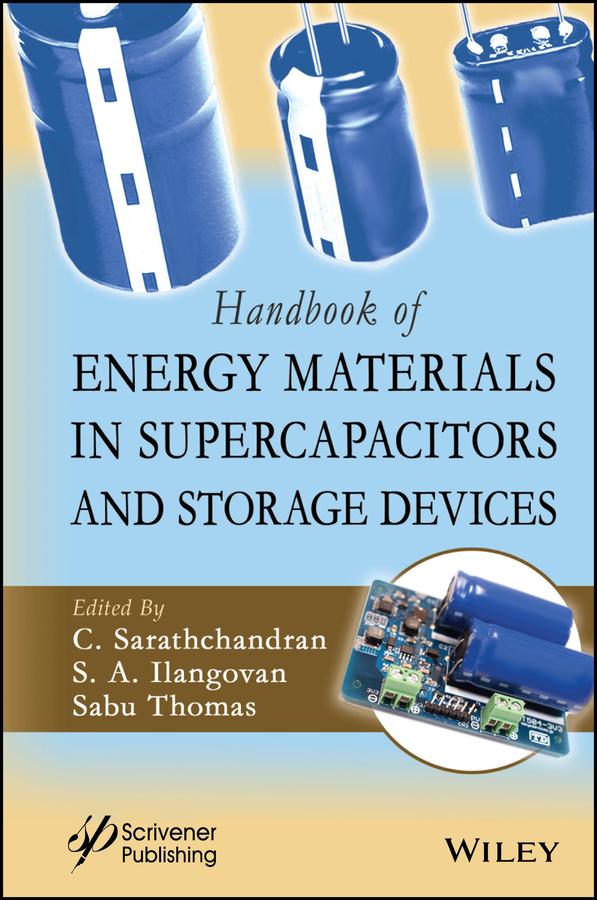
Accelerate your understanding of modern energy storage with this one-stop resource that provides a comprehensive guide to the basics, materials, and recent advancements in high-efficiency supercapacitor technology.
The increasing population, environmental pollution, and growing demand for energy underscores the importance of highly efficient energy storage devices. Supercapacitors, often referred to as ultracapacitors, have emerged as a pivotal technology in the realm of energy storage. Increasing demand for supercapacitors arises from the high energy density required by various modern applications like electric vehicles, UPS systems, wind turbines, space vehicles, regenerative braking, load leveling systems, etc. The above-mentioned applications require an improvement in working voltage (by preventing/reducing reaction between electrode and electrolyte surface), specific capacitance, and energy density (by increasing the surface area, addition of transition metal oxides/conducting polymers, etc.) of the existing supercapacitors. Global research is directed towards blending the high energy density of batteries with the high-power density of traditional capacitors, thereby enabling the supercapacitors to be ideal for applications demanding rapid charge and discharge cycles, high power output, and long cycle life.
This book is designed to cover the basics of supercapacitors and provide a current account of the recent advances in this field. It provides the basics of various materials, different stages of growth in this field, and recent developments, making it a one-stop resource for understanding and advancing the field of supercapacitor technology.
Readers will find in the volume;
- A detailed explanation of the electrochemical processes and energy storage mechanisms in supercapacitors, with a detailed introduction to supercapacitors;
- A comprehensive review of various electrode materials, including carbon-based materials, metal oxides, and conducting polymers;
- A detailed discussion on different electrolyte types (aqueous, organic, and ionic liquids) and their impact on supercapacitor performance;
- An exploration of the design considerations and manufacturing techniques for supercapacitors.
Audience
The book will be a valuable resource for researchers, engineers, and industry professionals involved in various fields, including electronics, automotive, renewable energy, and grid storage.
Paga facilmente con carta, Klarna, Apple Pay o Google Pay. Non sei soddisfatto? Hai sempre 14 giorni per il rimborso. Leggi di più nei nostri termini. Per qualsiasi domanda, scrivici a hello@memmo.org.
Memmo rende lo studio più facile, ovunque tu sia nel mondo. Qui trovi i tuoi libri di testo e strumenti di studio intelligenti, tutto in un unico posto: riassunti, quiz, podcast e flashcard. E poi c'è Ted, il tuo compagno di studio che risponde a ogni tua domanda. Oltre 50.000 studenti studiano già qui: è stato creato per aiutarti a imparare più velocemente e a stressarti meno.